
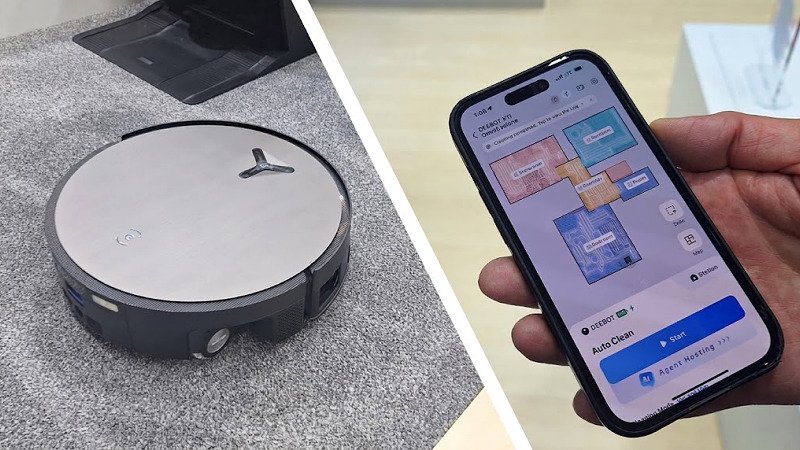
LiDAR vs Camera Navigation in Robot Vacuum Cleaners
When choosing between LiDAR or camera navigation for robot vacuum cleaners, the decision can feel like a tug-of-war between precision and cost. Both technologies "see" the floor differently, each with unique strengths and weaknesses. But here's the twist: your choice isn’t just about technology—it’s about aligning features with your market’s needs and budget.
LiDAR offers unmatched precision but comes at a price[^1]; camera navigation brings affordability but struggles in low-light conditions. The good news? Your buyers don’t always need the most expensive solution—just the right one. Let’s break this down further.
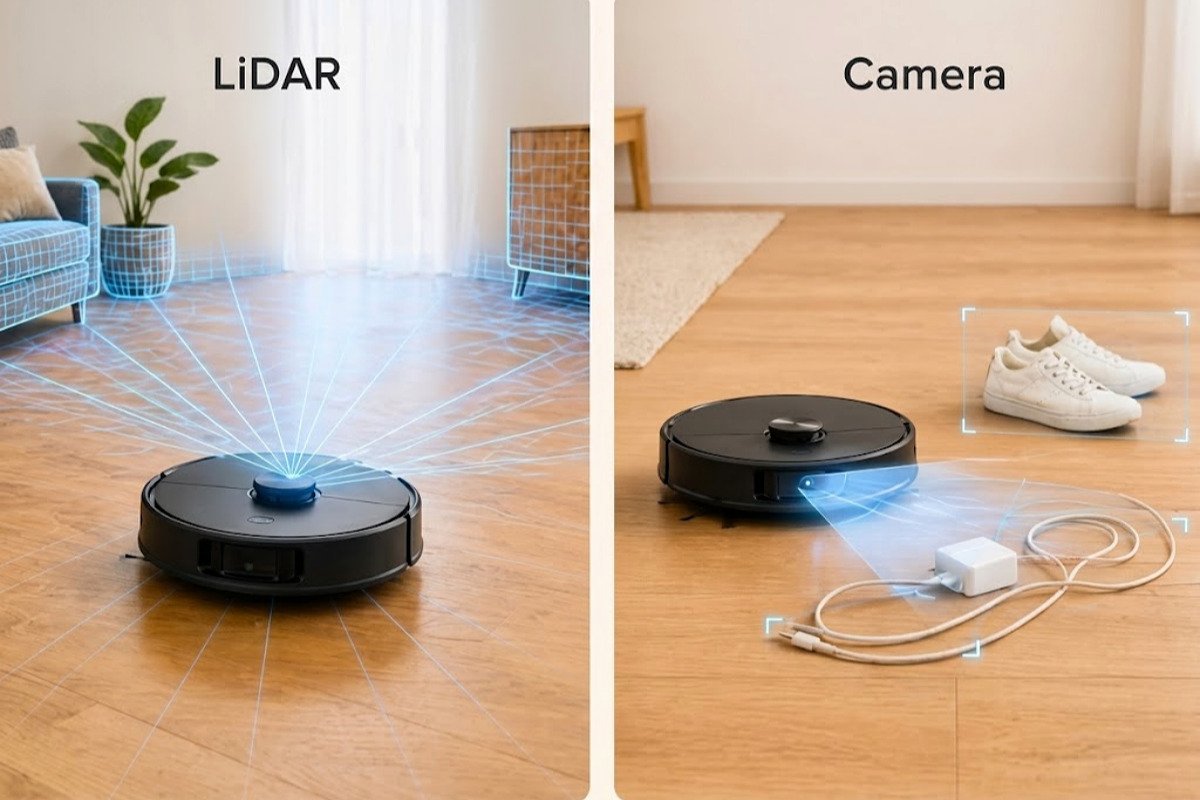
Curious about how these systems differ and how to choose wisely? Keep reading.
Precision & Lighting: How LiDAR and Cameras "See" Your Floor (and Why Dark Rooms Matter)
Both LiDAR and cameras help robot vacuums navigate homes, but the way they process their surroundings couldn’t be more different. LiDAR uses lasers to map spaces down to millimeters[^2], while cameras rely on pattern recognition and visual landmarks. Here's where lighting becomes a game-changer.
LiDAR doesn’t need lighting—it works flawlessly in pitch-black rooms[^3]. Cameras, on the other hand, falter in dim settings, leading to navigation errors.
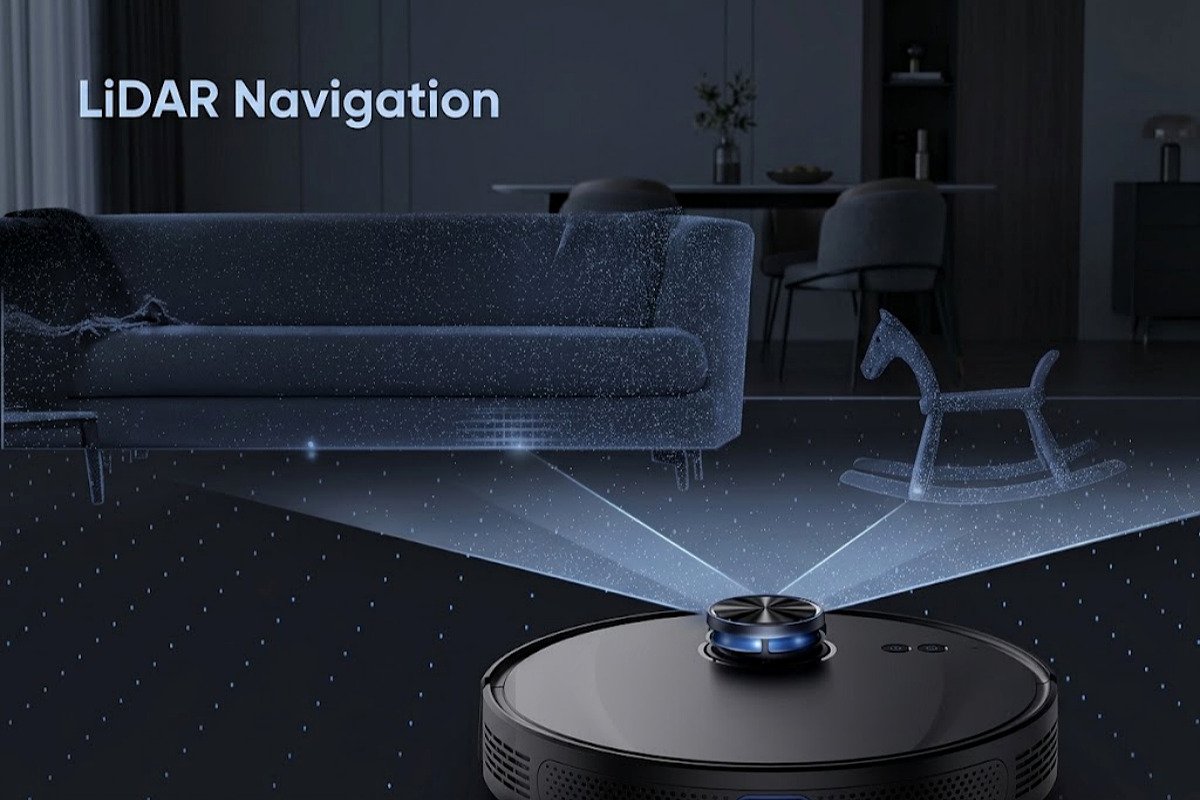
Dive Deeper: Why Lighting and Precision Matter
LiDAR shines when precision takes center stage. It emits laser beams that bounce off surfaces and return to the sensor, building a detailed 3D map of the room. Think of it as the vacuum holding a virtual blueprint of the space. Whether the lights are on or off, LiDAR delivers consistent accuracy, which is crucial for crowded homes with furniture or high-traffic areas[^4].
Camera navigation relies entirely on visual data. It captures images of its surroundings and processes them to identify walls, obstacles, and paths. While modern models use advanced algorithms to improve accuracy, cameras are still affected by inconsistent lighting. For example:
- In brightly lit spaces, camera-based navigation performs well for basic floor mapping.
- In low-light or nighttime usage, reliability drops; shadows or poor contrast can lead to missed areas or collision with furniture.
If you're targeting markets where users run vacuum cleaners at night or in dim homes (think regions with long winters or power-saving habits), LiDAR has undeniable advantages. Omitting this from your design could alienate customers demanding reliable nighttime performance.
Privacy, Height Profile, and Obstacle Avoidance: The Trade-Offs Nobody Tells You About
Features like privacy, floor depth mapping, and obstacle handling bring their own challenges. While robot vacuums aim to clean efficiently, the trade-offs between LiDAR and camera integrations may surprise you. LiDAR doesn’t snap images of your home, maintaining user privacy, but cameras can map vertical profiles better for sharper obstacle avoidance.
Trade-offs boil down to what matters most to your target demographic.
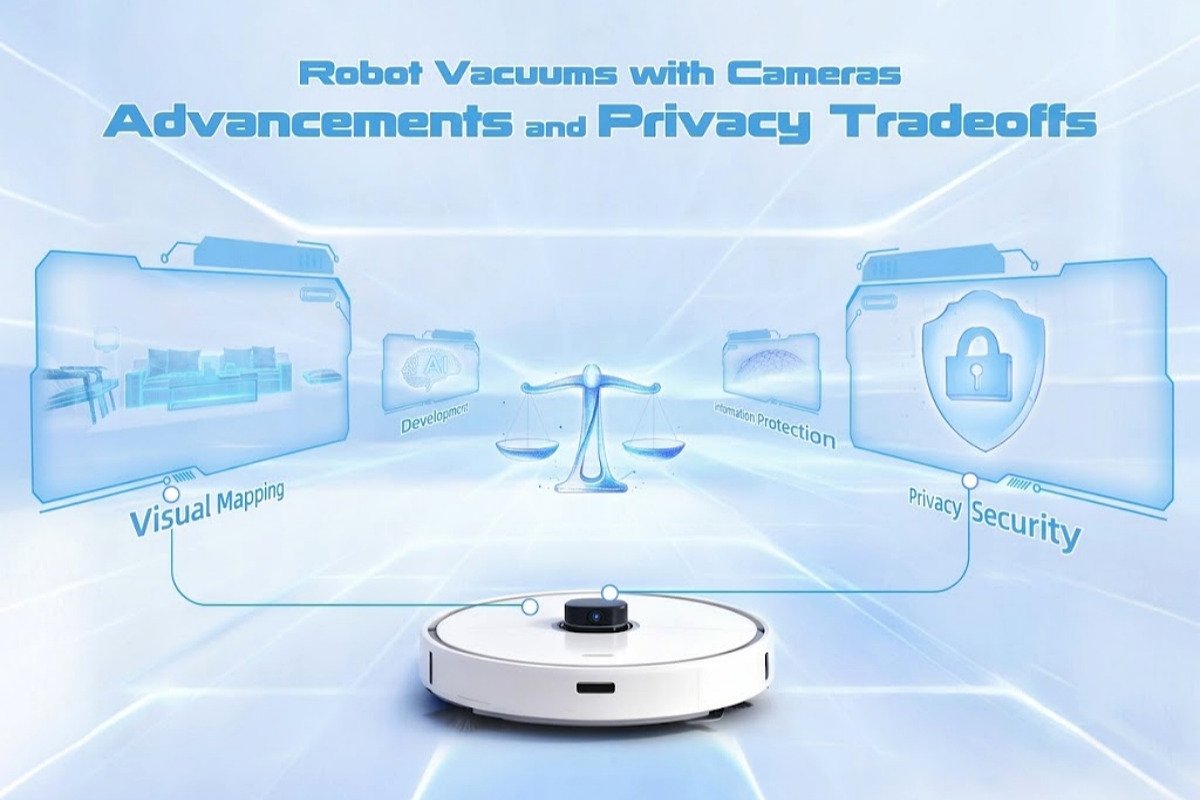
Dive Deeper: Understanding these Trade-Offs
Let’s address the privacy question first. Cameras inherently capture images, which could raise red flags in privacy-conscious markets[^5]. While most camera data remains localized within the vacuum’s system, some consumers worry about how brands handle data management. LiDAR sidesteps these concerns entirely—it doesn’t visually record surroundings[^6], making it ideal for privacy-sensitive users.
Now, let’s talk about obstacle avoidance. Camera-based systems are better at recognizing objects by their vertical profiles, helping them navigate around furniture legs and tricky layouts more intelligently. LiDAR has a tougher time identifying slim obstacles like chair gaps[^7] but excels at mapping free-floor areas with accuracy. Here's a comparison:
| Feature | LiDAR | Camera |
|---|---|---|
| Privacy | Highly private | Moderate risk |
| Low-light navigation | Excellent | Poor |
| Vertical obstacle recognition | Moderate | Excellent |
| Precision in crowded spaces | Excellent | Good |
The bottom line? Understand who your vacuum caters to before making a choice. American and European markets with privacy regulations might favor LiDAR, while South American or Southeast Asian households with dynamic layouts might appreciate camera systems’ obstacle coverage.
“Isn’t LiDAR just too expensive?” I hear this so often from clients. Yes, LiDAR typically raises upfront costs compared to cameras—but that’s an oversimplified answer. Proper product design can mitigate these costs, and not everyone needs ultra-high precision.
Understanding your market’s price sensitivity and performance expectations is key.
Dive Deeper: Cost-Performance Trade-Offs
LiDAR components, especially high-quality ones, aren’t cheap[^8]—but they’ve seen significant cost drops over the years due to wider adoption in robot vacuums. When debating LiDAR versus cameras, it’s essential to factor in:
- Batch size and component sourcing: Large orders for LiDAR can lower per-unit cost, minimizing the price gap.
- Target environment complexity: Homes with minimalist layouts or predictable obstacle patterns (e.g., wide hallways) are better suited for affordable camera navigation.
- Regional price expectations: High-income markets like Western Europe and the U.S. are less price-sensitive, especially when marketing a premium product.
A common mistake I see brands make is chasing affordability without fully considering user scenarios. For example, selling camera-based vacuums in regions with frequent low-light usage leads to poor performance perception—and frustrated consumers. On the other hand, deploying high-cost LiDAR vacuums in cost-sensitive markets with simple layouts burns resources unnecessarily.
Frequently Asked Questions
Is LiDAR better than cameras for all vacuums?
Not necessarily. LiDAR is ideal for users needing precise navigation in complex, crowded spaces or dark environments. Camera systems work perfectly in well-lit homes with straightforward layouts. It's all about choosing based on customer needs.
Generally, no—camera systems struggle to “see” in low-light conditions. If nighttime use is important for your market, LiDAR is the better option.
Does LiDAR increase costs significantly?
It can, but cost-saving design strategies and bulk sourcing help minimize the gap. The exact cost difference depends on your product specifications and production volume.
Conclusion
Choosing between LiDAR and camera navigation boils down to one question: What do your customers need most—precision, affordability, or adaptability? LiDAR delivers unmatched accuracy and reliability under all lighting conditions but at a higher initial cost. Cameras offer budget-friendly navigation for simpler environments but come with limitations like poor low-light performance.
Match the navigation tech to your market. For importers and brand owners, this decision is not just technical—it’s deeply tied to user expectations and regional demographics. If you’re ready to discuss how to align features with your specific market needs, let’s start the conversation.
[^1]: "Camera Projection versus Direct LiDAR Segmentation", https://arxiv.org/html/2509.20486v1. Studies comparing LiDAR and camera-based navigation systems indicate that LiDAR provides higher precision in mapping and navigation, though it generally incurs higher production costs. Evidence role: statistic; source type: research. Supports: LiDAR offers higher precision than camera-based navigation but is typically more expensive.. [^2]: "What is lidar?", https://oceanservice.noaa.gov/facts/lidar.html. Research on LiDAR technology demonstrates its ability to achieve millimeter-level precision in spatial mapping by emitting and measuring laser beams. Evidence role: mechanism; source type: paper. Supports: LiDAR maps spaces with millimeter-level precision using laser beams.. [^3]: "What is lidar?", https://oceanservice.noaa.gov/facts/lidar.html. LiDAR systems use laser pulses to measure distances, enabling them to function independently of ambient lighting conditions, including in complete darkness. Evidence role: mechanism; source type: education. Supports: LiDAR operates effectively in complete darkness without requiring external lighting.. [^4]: "LiDAR for Crowd Management: Applications, Benefits, and ...", https://arxiv.org/html/2603.27663v1. Case studies on LiDAR-based robot vacuums highlight their ability to maintain consistent accuracy in navigating crowded and complex environments. Evidence role: case_reference; source type: research. Supports: LiDAR provides consistent accuracy in navigation, even in crowded homes with furniture or high-traffic areas.. [^5]: "Safeguarding privacy in transportation data", https://www.ce.washington.edu/news/article/2024-11-21/safeguarding-privacy-transportation-data. Privacy experts have raised concerns about camera-based navigation systems in consumer devices, as they capture and process images of private spaces. Evidence role: expert_consensus; source type: institution. Supports: Camera-based navigation systems may raise privacy concerns because they capture images of the environment.. [^6]: "What is lidar?", https://oceanservice.noaa.gov/facts/lidar.html. LiDAR systems use laser-based distance measurements rather than visual imaging, which eliminates the risk of capturing identifiable visual data. Evidence role: mechanism; source type: education. Supports: LiDAR avoids privacy concerns because it does not capture visual images of the environment.. [^7]: "Lidar Resistant to Interference and Hacking", https://www.ll.mit.edu/partner-us/available-technologies/lidar-resistant-interference-and-hacking. Research on LiDAR navigation systems shows that they may have difficulty detecting slim or narrow obstacles due to their reliance on laser reflection. Evidence role: mechanism; source type: research. Supports: LiDAR struggles to identify slim obstacles such as chair gaps compared to camera-based systems.. [^8]: "ELI5. Why is a LIDAR sensor more expensive than a ...", https://www.reddit.com/r/SelfDrivingCars/comments/178ou7n/eli5_why_is_a_lidar_sensor_more_expensive_than_a/. Market analyses indicate that LiDAR components, particularly high-quality ones, are more expensive than camera-based navigation systems due to their advanced laser technology. Evidence role: statistic; source type: research. Supports: High-quality LiDAR components are generally more expensive than camera-based navigation systems..
Related Posts
How Self-Cleaning and Hot Air Drying Work in Floor Washers?
# How Self-Cleaning and Hot Air Drying Work in Floor Washers? Floor washers equipped with self-cleaning and hot air drying…
kPa vs Air Watts vs CFM: What Vacuum Cleaner Buyers Need to Know
# kPa vs Air Watts vs CFM: What Vacuum Cleaner Buyers Need to Know Shopping for a vacuum cleaner can…
HEPA H13 vs Standard Filters: Which Is Better for a Vacuum Cleaner?
# HEPA H13 vs Standard Filters: Which Is Better for a Vacuum Cleaner? When choosing a vacuum cleaner filter, the…
Leave a Reply