
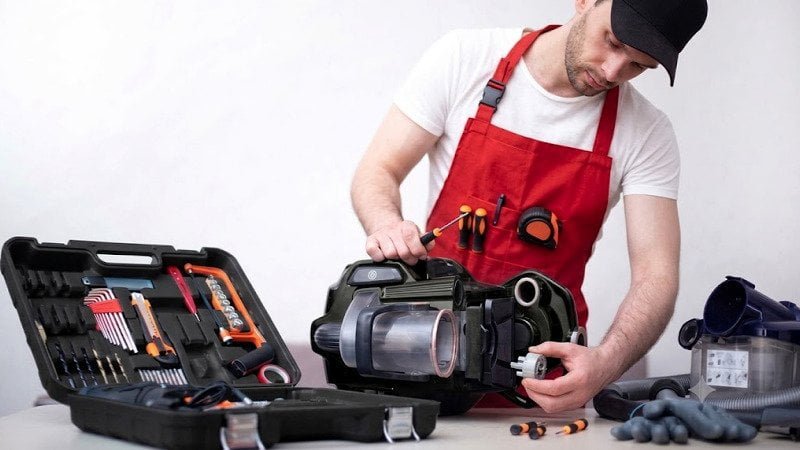
How Do I Know If My Vacuum Cleaner Needs Repair?
How Do I Know If My Vacuum Cleaner Needs Repair?
I may keep using a struggling vacuum cleaner until a small blockage, damaged seal, or worn brush becomes a costly motor failure.
I know my vacuum cleaner may need repair when I notice weak suction, unusual noise, overheating, repeated shutdowns, burning smells, electrical problems, or visible damage. I first check the filters, dust container, hose, brush roll, and power supply before arranging a professional repair.
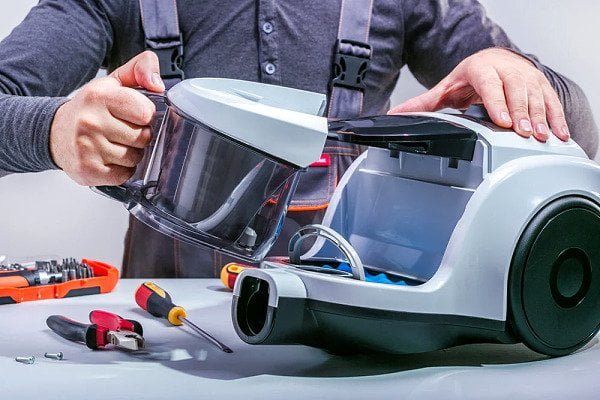
A sudden performance change does not always mean that my vacuum cleaner has a major fault. A full dust container, dirty filter, blocked hose, or tangled brush can cause similar symptoms.
However, I do not ignore repeated problems. I stop using the appliance when I notice smoke, sparks, a burning smell, electric shocks, a damaged power cord, or excessive heat.
The key is knowing which problems I can safely solve through basic maintenance and which problems require a trained technician.
What Are the Most Common Signs That My Vacuum Cleaner Needs Repair?
I may assume that poor cleaning results come from an old vacuum cleaner, but worn parts and airflow problems are often the real causes.
My vacuum cleaner may need repair if suction remains weak after cleaning the filters and removing blockages. Unusual noise, burning smells, overheating, power loss, fluid leaks, damaged switches, and a brush roll that does not turn are also important warning signs.
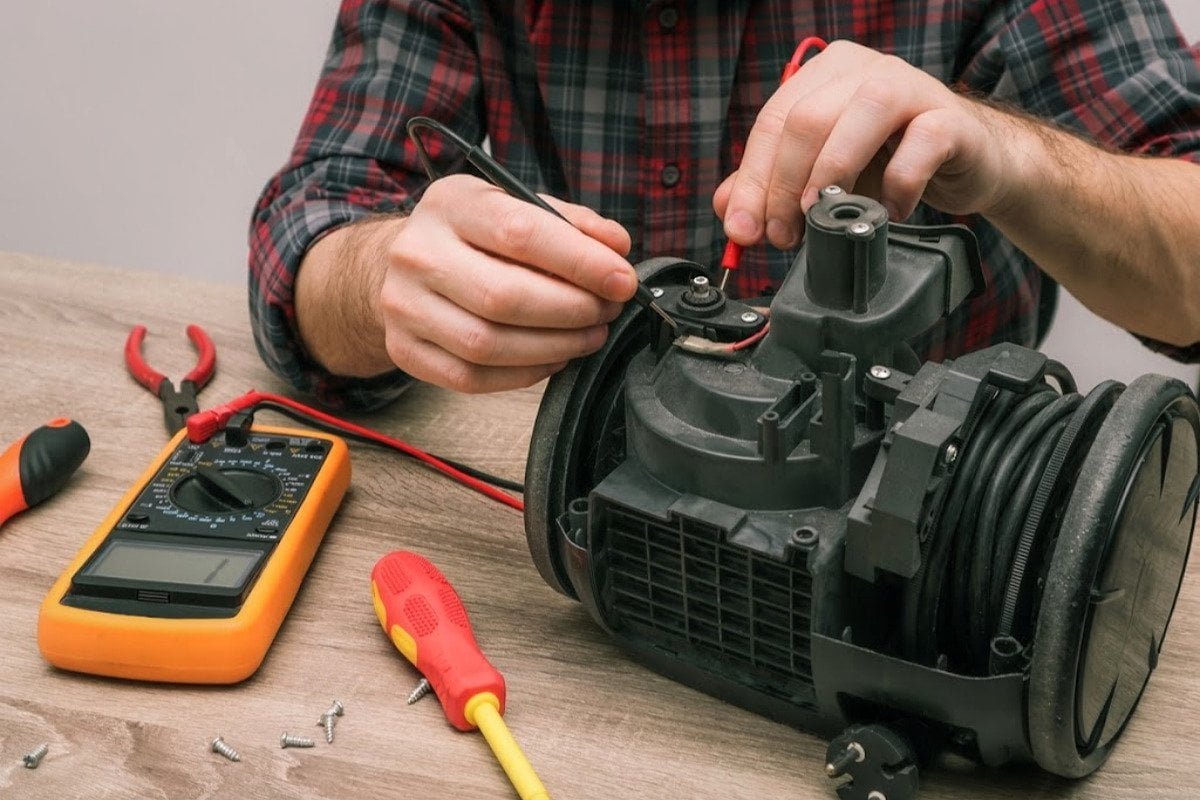
Weak or Unstable Suction
I first compare the current suction with the vacuum cleaner’s normal performance. A gradual drop often points to a dirty filter, full bag, blocked air path, cracked hose, or worn seal. A sudden loss of suction may indicate a disconnected hose, damaged fan, or internal blockage.
I empty the dust container or replace the dust bag. I clean or replace the filters according to the instruction manual. I also check the hose, floor head, tubes, and air inlets.
If the suction remains weak after these checks, I arrange an inspection. The motor, fan, internal duct, gasket, or electronic control system may need attention.
Unusual Noise or Vibration
I listen for changes such as grinding, rattling, whistling, clicking, or high-pitched motor sounds. A trapped object may cause some noises. A damaged bearing, loose fan, worn belt, or brush-roll problem may cause others.
I stop the appliance if the noise becomes loud or mechanical. Continued use may turn a replaceable part into motor damage.
Overheating or Repeated Shutdowns
I treat repeated shutdowns as a warning. Some vacuum cleaners use thermal protection to switch off when the motor becomes too hot. A clogged filter, blocked hose, restricted exhaust, or overloaded brush roll can trigger this protection.
I unplug the vacuum cleaner and let it cool. I then check the airflow path. If the appliance continues to overheat after basic maintenance, I ask a technician to inspect it.
| Warning sign | Possible cause | My first action |
|---|---|---|
| Weak suction | Full bag, dirty filter, blockage, damaged seal, or motor problem | I empty, clean, and inspect the airflow path |
| Grinding noise | Brush-roll damage, bearing wear, fan damage, or trapped debris | I switch off and inspect accessible parts |
| Burning smell | Overheated belt, motor, wiring, or electrical component | I unplug the appliance immediately |
| Repeated shutdown | Blocked airflow, overheating, battery fault, or control-board problem | I allow cooling and check for blockages |
| Brush not turning | Tangled hair, broken belt, motor fault, or connection problem | I remove debris and check the manual |
| Poor battery runtime | Battery ageing, charger fault, or electronic problem | I test the charger and arrange battery inspection |
| Water leakage | Damaged tank, seal, hose, valve, or incorrect assembly | I stop operation and inspect the wet system |
How Can I Tell the Difference Between a Blockage and a Mechanical Fault?
I do not want to pay for a repair when normal cleaning can restore performance. I also do not want to damage the motor by ignoring a serious fault.
I usually suspect a blockage when suction drops but the motor still sounds normal. I suspect a mechanical or electrical fault when the problem remains after cleaning the airflow path or when I notice grinding, overheating, sparks, burning smells, or repeated power loss.
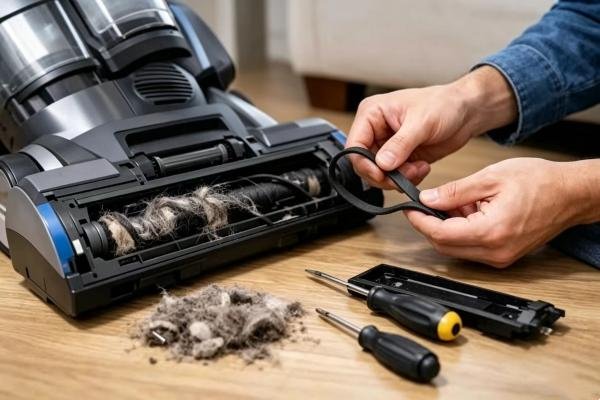
My Basic Airflow Check
I always unplug a corded vacuum cleaner before checking it. I also switch off a cordless vacuum cleaner and remove the battery when the design allows safe battery removal.
I begin with the dust container or bag. I then check the pre-motor filter, exhaust filter, hose, extension tube, floor head, and brush roll. I follow the manufacturer’s cleaning instructions because some filters are washable and others are not.
I never reinstall a washable filter while it is still damp. Moisture can restrict airflow and may reach electrical components.
I use a blunt and non-damaging tool only when the manual allows it. I avoid using sharp metal objects inside the hose because they may puncture the hose or damage internal wiring.
My Simple Isolation Test
I remove attachments one at a time when the product design allows it. If suction returns after I remove the floor head, I look for a blockage in that head. If suction remains weak at the hose inlet, I inspect the hose and filters.
I do not open the motor housing during this process. Internal repairs can expose live components, sharp parts, charged capacitors, or protected seals.
I arrange professional repair when the following conditions remain after normal maintenance:
- I still have weak suction after clearing the complete airflow path.
- I hear grinding or metal contact inside the motor housing.
- I notice oil, melted plastic, or damaged insulation.
- I see error codes that return after the recommended reset.
- I find that the brush motor, main motor, battery, or control panel does not work.
- I notice that a repaired blockage quickly returns without an obvious cause.## Which Vacuum Cleaner Problems Require Immediate Professional Repair?
I can safely clean many accessible parts, but I should never continue using a vacuum cleaner that shows an electrical, fire, or serious mechanical risk.
I stop using my vacuum cleaner immediately if I see smoke, sparks, melted plastic, exposed wires, a damaged plug, fluid near electrical parts, or signs of electric shock. I also stop if the motor makes severe grinding noises or becomes unusually hot.
Electrical Warning Signs
I unplug the vacuum cleaner by holding the plug rather than pulling the cable. I do not touch the plug or appliance with wet hands. If the plug, cord, switch, charger, battery, or socket looks burned or damaged, I do not test it again.
I do not repair a damaged power cable with ordinary tape. Tape may hide the damage without restoring insulation, strain relief, or electrical safety. A qualified repair technician should replace the correct cable assembly.
I treat repeated circuit-breaker trips as another warning. The problem may come from the appliance, the socket, or the building circuit. I stop testing until the cause is checked.
Burning Smells, Smoke, and Excessive Heat
I distinguish a brief smell from newly manufactured materials from a strong burning smell that appears during use. A hot rubber smell may come from a jammed belt. A sharp electrical smell may come from wiring, a control board, or the motor.
I switch off and unplug the appliance if the smell is strong, new, or repeated. I do not continue using it to “see if the smell goes away.”
Wet and Dry Vacuum Cleaner Risks
I use liquid-pickup functions only when the model is designed for wet collection. I install the correct wet-use filter or remove the dry dust bag when the manual requires it.
I stop using the machine if water leaks from the tank, reaches the motor head, or appears near electrical connections. A damaged float valve, seal, tank, hose, or assembly may require repair.
| Situation | Can I continue using it? | Recommended response |
|---|---|---|
| Filter needs cleaning | No, until maintenance is completed | I clean or replace it according to the manual |
| Hose has an accessible blockage | No, until the blockage is removed | I unplug the machine and clear it safely |
| Power cord is cut or melted | No | I arrange professional replacement |
| Vacuum produces smoke or sparks | No | I disconnect power and arrange inspection |
| Motor repeatedly overheats | No | I check airflow, then request repair if it continues |
| Water reaches electrical parts | No | I stop use and request professional inspection |
| Housing has minor cosmetic scratches | Usually yes | I monitor the damage and check structural safety |
| Structural housing is cracked | No, if internal parts are exposed | I replace the damaged part or arrange repair |
Should I Repair or Replace My Vacuum Cleaner?
I may focus only on the repair price, but product age, safety, parts availability, and future reliability also affect the right decision[^1].
I normally repair my vacuum cleaner when the fault is clear, parts are available, and the total repair cost is reasonable compared with replacement. I consider replacement when the motor, battery, housing, and electronic system have several faults or when safe parts are unavailable.
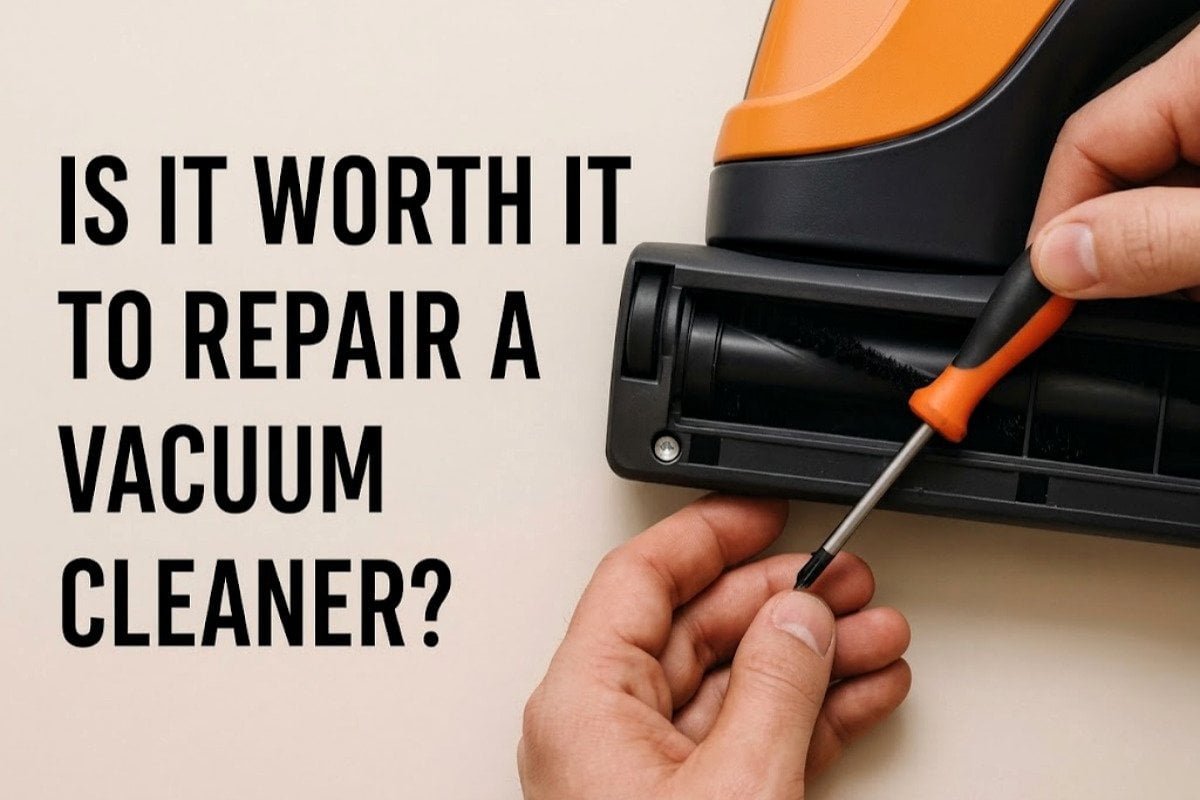
When Repair Makes Sense
I consider repair when the appliance is still structurally sound and the fault affects a replaceable component. Common examples include a damaged hose, worn belt, broken wheel, brush roll, switch, seal, filter cover, battery, charger, or power cable.
I also check the warranty before paying for repair. An unauthorised repair may affect warranty coverage.[^2] I keep the model number, serial number, purchase invoice, and fault description ready when I contact the seller or service centre.
A repair may offer good value when the appliance is a professional, industrial, or premium model. These machines may have durable housings and replaceable motors, switches, hoses, wheels, tanks, and accessories.
When Replacement May Be Better
I consider replacement when several major systems fail at the same time. A damaged motor, cracked housing, unavailable control board, worn battery, and missing safety parts can make a repair costly or unreliable.[^3]
I do not use a universal percentage as the only rule. A repair that costs half the price of a new product may still make sense for a commercial machine with available spare parts. The same repair may not make sense for a low-cost household model with other worn components.
I use the following questions:
- Is the appliance still under warranty?
- Is the exact fault known?
- Are original or approved parts available?
- Is the housing structurally safe?
- Does the repair restore normal safety and performance?
- Are other major parts also near the end of their service life?
- Does the new replacement offer better energy use, filtration, noise control, or parts support?
- Can a qualified technician complete and test the repair?
How Can I Prevent My Vacuum Cleaner from Needing Frequent Repairs?
I cannot prevent every component from wearing out, but regular maintenance helps me avoid many airflow, brush, battery, and overheating problems[^4].
I reduce repair risk by emptying the dust container, changing bags on time, maintaining filters, removing brush-roll hair, checking hoses, using the correct accessories, and following the manufacturer’s limits for liquids, hot debris, fine dust, and operating time.
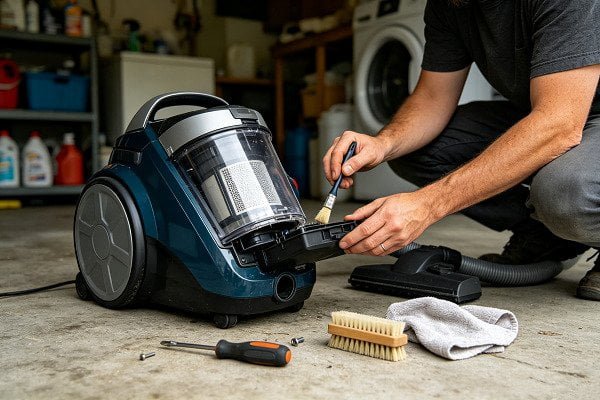
My Regular Maintenance Routine
I empty the dust container before dirt reaches the maximum line.[^5] I replace disposable bags before they become tightly packed. I inspect the brush roll for hair, thread, cable, and carpet fibres.
I clean filters only as directed. I replace them when washing no longer restores airflow or when the filter is torn, deformed, or permanently blocked.
I inspect the hose for cracks, loose connections, and objects. I also check wheels, seals, latches, floor nozzles, tubes, and accessory connections.
For cordless models, I use the correct charger. I avoid storing the battery near heat, direct sunlight, or moisture. I stop using a battery that swells, leaks, becomes unusually hot, or has a damaged casing.[^6]
Materials I Avoid Collecting
I do not collect burning ash, hot metal, flammable liquids, solvents, sharp objects, or hazardous dust unless the vacuum cleaner is specifically designed and certified for that material.
I do not use a normal household vacuum for construction dust, large volumes of fine powder, or wet collection unless the manufacturer permits it. Fine dust can rapidly block filters and reach the motor.[^7]
Information I Give the Repair Technician
I make repair work easier by recording the symptoms clearly. I provide the model number, approximate age, usage environment, error code, and the moment when the fault appears.
I also explain what I have already checked. A short video of the noise, warning light, or brush problem may help the service centre understand the fault. I do not continue operating an unsafe appliance just to record the problem.
| Maintenance task | Suggested check |
|---|---|
| Empty dust container or replace bag | I check before or after each major cleaning job |
| Inspect brush roll | I check regularly for hair and thread |
| Check hose and air path | I check when suction becomes weaker |
| Clean or replace filters | I follow the model’s instruction manual |
| Inspect cord, plug, charger, and battery | I check before use |
| Check wet tank and seals | I check before wet collection |
| Inspect wheels and attachments | I check when movement or cleaning becomes difficult |
| Arrange professional service | I act when safety or internal parts are involved |
Conclusion
I treat weak suction as a maintenance signal, but I stop immediately when I notice heat, smoke, sparks, electrical damage, or serious mechanical noise.
[^1]: "Understanding lifetimes and failure modes of defective ... - PMC", https://pmc.ncbi.nlm.nih.gov/articles/PMC6472650/. Consumer and repairability research treats product age, expected remaining life, spare-parts availability, safety, and likely repair durability as relevant factors when comparing repair with replacement. Evidence role: general_support; source type: research. Supports: Repair-versus-replacement decisions should consider product age, safety, parts availability, and future reliability in addition to repair price.. Scope note: The relative importance of these factors varies by vacuum type, usage intensity, local repair costs, and the availability of replacement products. [^2]: "FTC says companies' warranty restrictions were illegal", https://consumer.ftc.gov/consumer-alerts/2022/07/ftc-says-companies-warranty-restrictions-were-illegal. Official warranty guidance indicates that warranty consequences depend on the governing law and warranty terms; coverage may be denied when an unauthorized repair causes the claimed damage, although independent repair does not automatically void all warranty rights in every jurisdiction. Evidence role: general_support; source type: government. Supports: An unauthorized repair may affect warranty coverage.. Scope note: Warranty law differs by country, and some jurisdictions prohibit blanket cancellation of coverage solely because an independent repair or third-party part was used. [^3]: "Understanding lifetimes and failure modes of defective washing ... - PMC", https://pmc.ncbi.nlm.nih.gov/articles/PMC6472650/. Product-life and repairability literature identifies the number and severity of failed components, spare-parts availability, structural condition, and repair quality as determinants of repair cost and the reliability of the restored product. Evidence role: mechanism; source type: research. Supports: Multiple major failures and unavailable safety-critical parts can make vacuum repair expensive or unreliable.. Scope note: Such evidence supports the decision factors generally rather than proving that every vacuum with this particular combination of faults should be replaced. [^4]: "EP4535C Vacuum Overheating? Expert Troubleshooting ...", https://www.justanswer.com/small-appliance/ucj7k-ep4535c-vacuum-poor-suction-filter-replacement.html. Vacuum-maintenance and appliance-safety guidance explains that clearing airflow paths, servicing filters and brush rolls, and caring for batteries can reduce blockage, excess motor load, brush obstruction, and battery-related faults. Evidence role: mechanism; source type: institution. Supports: Regular maintenance can help prevent airflow, brush, battery, and overheating problems in vacuum cleaners.. Scope note: Maintenance reduces preventable problems but cannot eliminate failures caused by component aging, manufacturing defects, or accidental damage. [^5]: "[PDF] General Laboratory Finding Guidance | MIT EHS", https://ehs.mit.edu/wp-content/uploads/comp_guidance_printable_2026.pdf. Vacuum-cleaner operating guidance commonly states that a dust container should be emptied at or before its marked maximum level because overfilling can restrict airflow and reduce cleaning performance. Evidence role: mechanism; source type: institution. Supports: Emptying a vacuum's dust container before it exceeds the maximum line helps preserve airflow and performance.. Scope note: The appropriate emptying point and the effect of overfilling depend on the appliance's bin geometry and filtration design. [^6]: "Lithium-Ion Battery Safety for Consumers - Pelham, NY", http://www.pelhamny.gov/m/newsflash/Home/Detail/13. Fire-safety authorities identify swelling, leakage, unusual heat, and visible casing damage as warning signs of lithium-ion battery failure that can precede fire, venting, or thermal runaway. Evidence role: expert_consensus; source type: government. Supports: A swollen, leaking, unusually hot, or physically damaged battery should no longer be used.. Scope note: These warning signs establish a potential hazard but do not diagnose the battery's precise internal fault. [^7]: "Filtration Mechanism of Fine Particle - PMC - NIH", https://pmc.ncbi.nlm.nih.gov/articles/PMC7498895/. Aerosol-filtration research shows that fine-particle loading can increase filter pressure drop and reduce airflow; whether particles penetrate to the motor depends on filter efficiency, sealing, particle size, and the vacuum's internal layout. Evidence role: mechanism; source type: paper. Supports: Large quantities of fine dust can rapidly load a household vacuum's filters and, in some designs, allow dust to reach the motor.. Scope note: The evidence directly supports filter loading and airflow restriction, but motor exposure is design-specific and is not inevitable in every household vacuum.
Related Posts
How Self-Cleaning and Hot Air Drying Work in Floor Washers?
# How Self-Cleaning and Hot Air Drying Work in Floor Washers? Floor washers equipped with self-cleaning and hot air drying…
kPa vs Air Watts vs CFM: What Vacuum Cleaner Buyers Need to Know
# kPa vs Air Watts vs CFM: What Vacuum Cleaner Buyers Need to Know Shopping for a vacuum cleaner can…
HEPA H13 vs Standard Filters: Which Is Better for a Vacuum Cleaner?
# HEPA H13 vs Standard Filters: Which Is Better for a Vacuum Cleaner? When choosing a vacuum cleaner filter, the…
Leave a Reply