
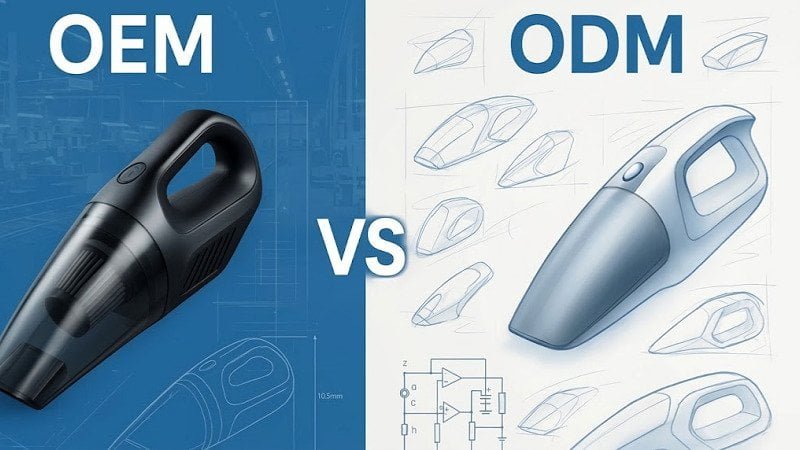
OEM vs ODM Vacuum Cleaners: Which Manufacturing Model Is Right for You?
OEM vs ODM Vacuum Cleaners: Which Manufacturing Model Is Right for You?
Choosing between OEM and ODM manufacturing models for vacuum cleaners can be challenging, especially for businesses looking to scale efficiently and differentiate products in competitive markets. Understanding how these two models impact product development, branding, and customization is critical for making the best decision.
OEM vacuum cleaner manufacturing offers highly customizable solutions tailored to individual branding needs[^1], while ODM simplifies processes with pre-designed products that are ready for private labeling[^2]. Businesses must assess their strategic goals, operational capabilities, and budget to decide which model aligns better with their objectives.
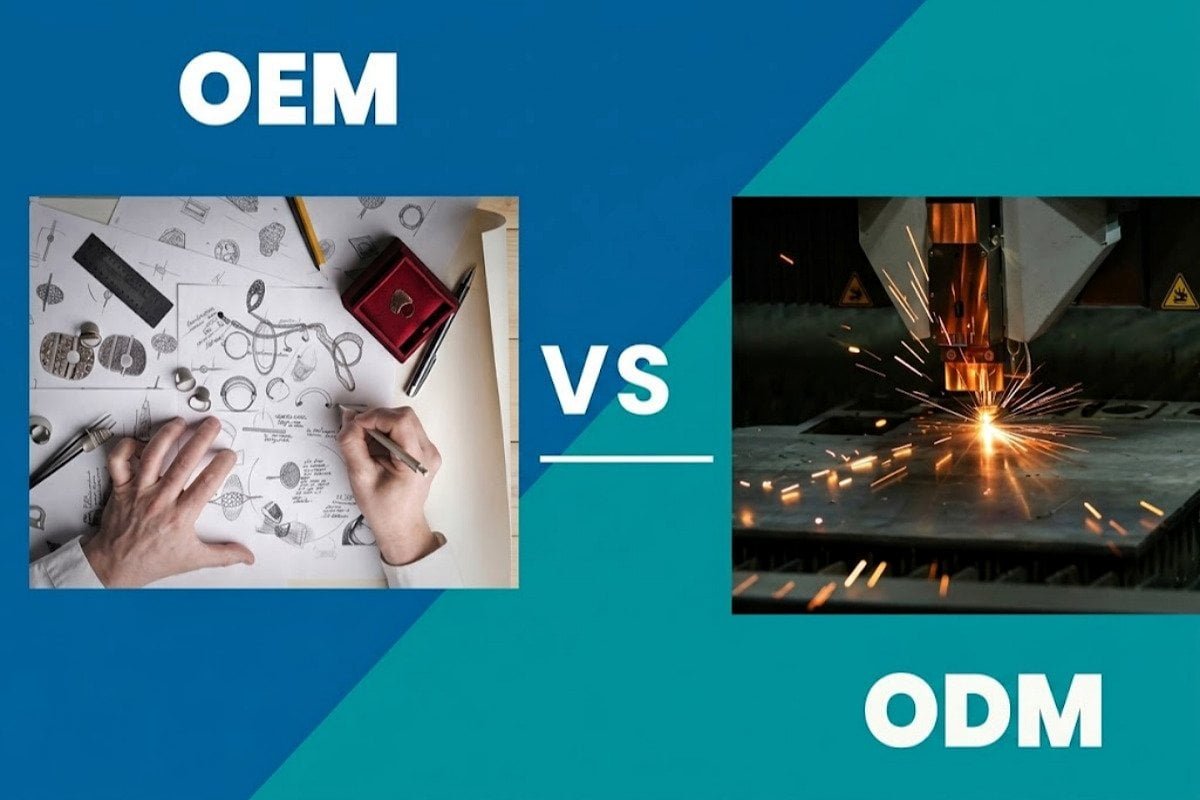
The following guide will simplify the differences between OEM and ODM, clarify key financial and operational factors, and provide actionable tips for choosing the right model based on common business scenarios.
What is OEM manufacturing for vacuum cleaners?
OEM manufacturing creates products based on the buyer’s proprietary specifications.
OEM (Original Equipment Manufacturer) focuses on fully customized products[^3]. Buyers supply unique designs, technical blueprints, or branding requirements, and the manufacturer produces the vacuum cleaners accordingly.
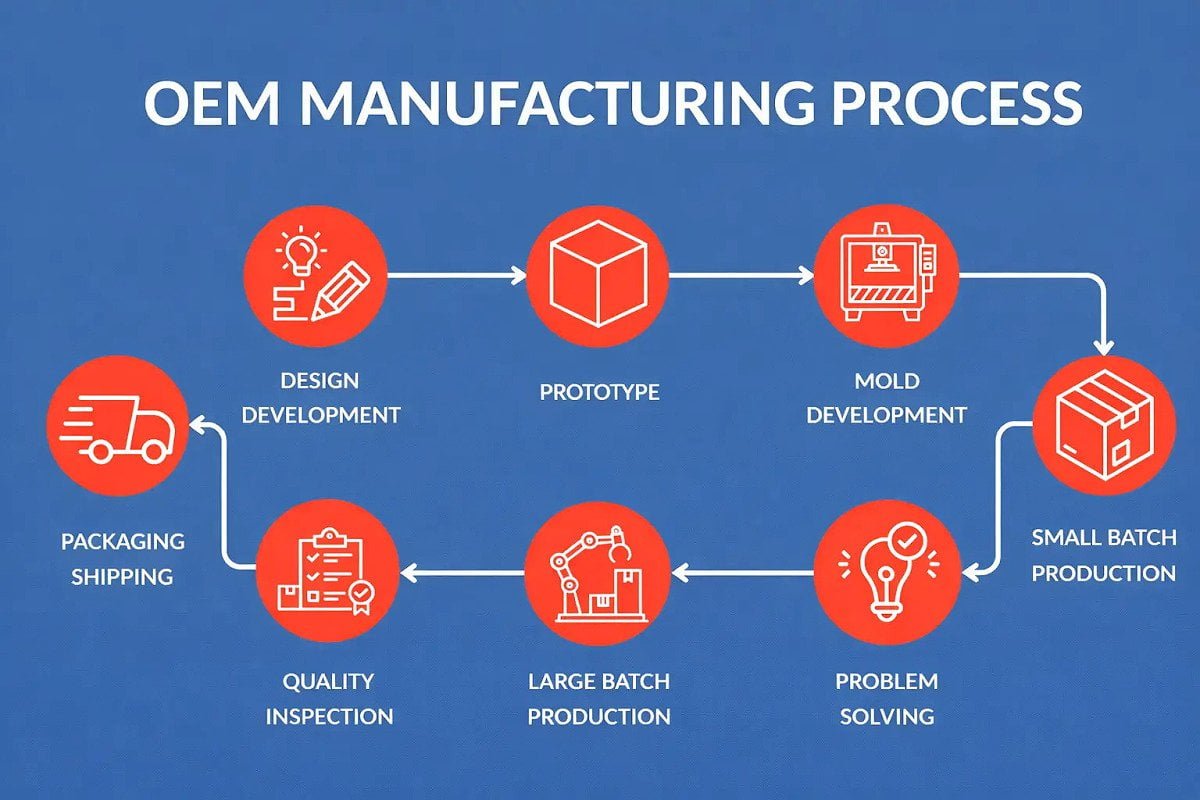
Dive deeper: How OEM works for vacuum cleaners
An OEM approach offers maximum flexibility, enabling buyers to dictate product designs, features, and branding. As a result, manufacturers act more like production partners following detailed guidelines. However, the upfront effort required for specifications and prototyping can be costly and time-intensive.
Some defining traits of OEM:
- High Degree of Customization: Buyers can create product designs from scratch or tweak every aspect of an existing design.
- Increased Brand Differentiation: Fits businesses aiming to build proprietary products that stand out in crowded markets.
- Ownership of Intellectual Property: Buyers retain rights to patented features or customizations[^4].
Who benefits most?
OEM is ideal for brand owners or importers in Europe, Southeast Asia, or other competitive markets[^5] looking to launch innovative, high-margin products. However, it demands technical know-how, design capabilities, and substantial budgets for product development.
What is ODM manufacturing for vacuum cleaners?
ODM manufacturing involves pre-designed, ready-made products that buyers can rebrand.
ODM (Original Design Manufacturer) streamlines production with an existing product template; buyers can apply their logo or branding without changing fundamental product features.
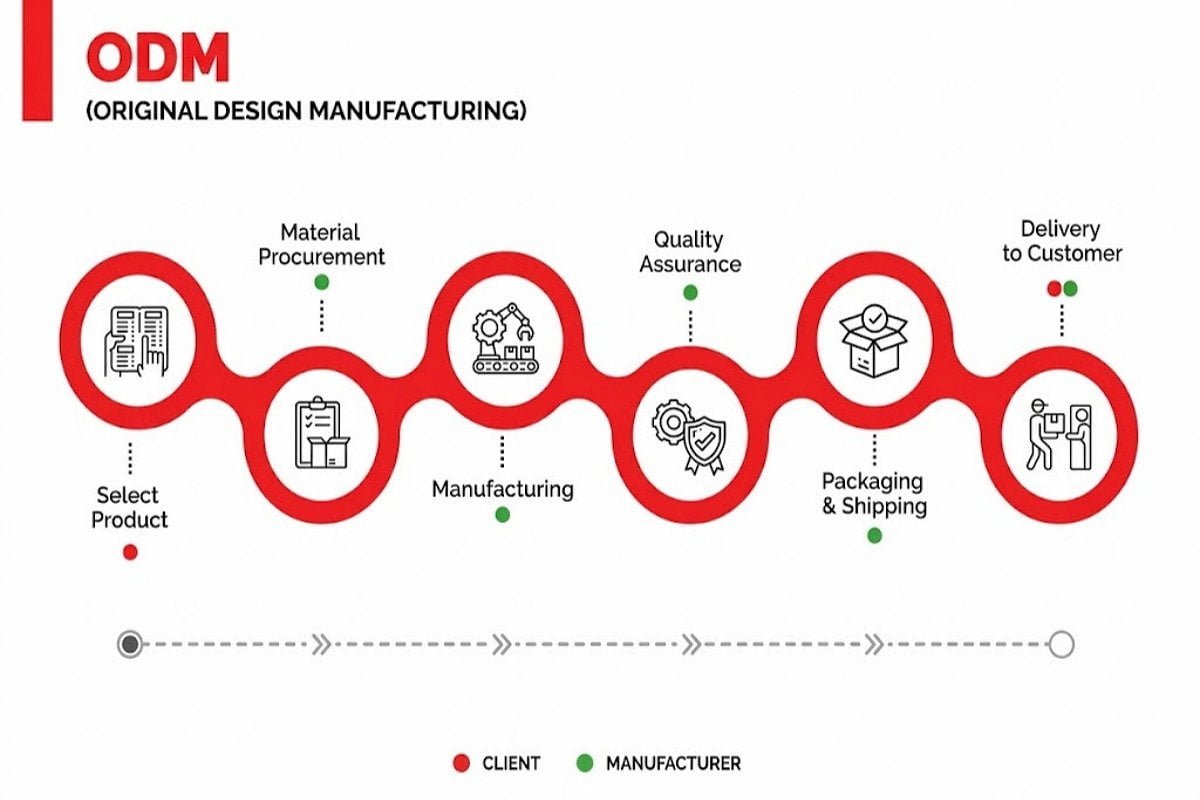
Dive deeper: How ODM works for vacuum cleaners
ODM suits businesses focusing on speed-to-market, simplicity, and affordability[^6]. Manufacturers create generic product designs that require little to no input from the buyer. Buyers then market these products under their brand name.
Key characteristics of ODM:
- Simplified Setup: Lower design complexity reduces lead times, making ODM faster to implement.
- Cost-Effective: Minimal investment required for prototyping and product iterations.
- Limited Customization: Buyers typically choose from a predefined catalog with fixed product designs.
Who benefits most?
ODM works well for smaller-scale retailers, importers, or budget-conscious businesses[^7]. It’s also a great entry point for brands testing a new product line without heavy financial risks.
How do OEM and ODM models compare financially?
Cost is often the deciding factor when choosing between OEM and ODM manufacturing.
| Model | Upfront Costs | Cost per Unit | Operational Investments | Profit Margins |
|---|---|---|---|---|
| OEM | High (design, prototyping) | Moderate to high | Requires design teams | Higher margins possible |
| ODM | Low (existing templates) | Lower | Minimal involvement | Margins depend on branding |
Dive deeper: Deciphering profit implications
OEM tends to have higher upfront costs due to tooling, prototyping, and intellectual property considerations[^8]. However, because the products are tailored, they offer greater pricing power and profitability in premium markets. On the other hand, ODM allows easier entry with minimal initial investment[^9] but may restrict differentiation, which can lower pricing power.
What risks and responsibilities come with each model?
Choosing the right supplier and managing expectations is vital to mitigating risks.
OEM manufacturing risks include cost overruns in product design and quality consistency[^10]. ODM risks often revolve around limited differentiation and market saturation[^11].
Dive deeper: Managing supplier relationships
For OEM partnerships:
- Supplier Trust: Ensure contracts guarantee confidentiality of proprietary designs.
- Quality Assurance: Verify certifications and manufacturing standards.
- Flexibility in Adjustments: Expect iterations during prototyping phases.
For ODM partnerships:
- Brand Integrity: Confirm that products align with your brand’s quality standards.
- Market Research: Evaluate competitors rebranding similar ODM products to avoid saturation.
- Supplier Reliability: Choose vendors with a proven track record of timely delivery and durable products.
Practical advice includes visiting supplier facilities, requesting product samples, and obtaining third-party audits whenever possible.
Frequently Asked Questions
What’s the biggest mistake brands make with OEM or ODM models?
Brands often fail to align their scale and resources with the complexity of the manufacturing model. Small businesses may over-invest in OEM, struggling with costs, while established market players risk diluting their brand with ODM.
How do I pick the best vacuum cleaner manufacturer?
Select manufacturers based on their expertise in either OEM or ODM processes. Look for certifications, positive client reviews, and experience serving brands in your target market region.
Can I combine OEM and ODM for my product line?
Yes! Some brands leverage ODM for low-cost, volume-driven products while using OEM to create signature high-margin products[^12]. This hybrid approach balances cost-efficiency with differentiation.
Conclusion
Deciding between OEM and ODM manufacturing models boils down to understanding your business goals, budget, and capacity for product differentiation. OEM vacuum cleaner manufacturing provides unparalleled customization for established brands, while ODM offers cost savings and simplicity for quick market entry.
If you’re evaluating manufacturing models for vacuum cleaners, I recommend consulting qualified suppliers, reviewing sample products, and assessing market positioning. Reach out to explore how a tailored manufacturing partnership could elevate your product strategy.
[^1]: "5 Benefits of Using OEM Manufacturing You Need to Know", https://shieldworksmfg.com/5-benefits-of-using-oem-manufacturing-you-need-to-know/. Research studies on OEM manufacturing highlight its ability to provide tailored solutions for branding and product differentiation, particularly in competitive markets. Evidence role: general_support; source type: research. Supports: OEM manufacturing offers highly customizable solutions tailored to branding needs.. Scope note: The level of customization may vary depending on the specific manufacturer and industry. [^2]: "Original design manufacturer - Wikipedia", https://en.wikipedia.org/wiki/Original_design_manufacturer. Studies on ODM manufacturing indicate that it reduces complexity by providing pre-designed products that can be easily rebranded. Evidence role: general_support; source type: research. Supports: ODM manufacturing simplifies processes by offering pre-designed products for private labeling.. Scope note: The extent of simplification may depend on the specific industry and product type. [^3]: "Original equipment manufacturer", https://en.wikipedia.org/wiki/Original_equipment_manufacturer. Encyclopedic entries on OEM manufacturing describe it as a process centered on producing customized products based on client specifications. Evidence role: definition; source type: encyclopedia. Supports: OEM manufacturing focuses on creating fully customized products.. Scope note: The degree of customization may vary depending on the manufacturer and product category. [^4]: "Managing a patent", https://www.uspto.gov/patents/basics/manage. Government resources on intellectual property laws confirm that buyers typically retain rights to patented features in OEM agreements. Evidence role: mechanism; source type: government. Supports: Buyers retain rights to patented features or customizations in OEM manufacturing.. Scope note: Specific terms may vary based on contractual agreements and jurisdiction. [^5]: "Competition Issues in Aftermarkets - Note from South Africa", https://one.oecd.org/document/DAF/COMP/WD(2017)14/en/pdf. Research on global manufacturing trends suggests that OEM is often preferred in competitive markets for its customization and differentiation capabilities. Evidence role: general_support; source type: research. Supports: OEM manufacturing is well-suited for brand owners or importers in competitive markets like Europe and Southeast Asia.. Scope note: The suitability of OEM may depend on specific market conditions and industry requirements. [^6]: "Speed to Market with ODM: Smart Path for IoT Development - Ikotek", https://www.ikotek.com/blog/when-you-feel-the-need-for-speed-take-the-direct-approach-by-choosing-an-odm/. Research on ODM manufacturing highlights its advantages in reducing time-to-market and lowering production costs. Evidence role: general_support; source type: research. Supports: ODM manufacturing is suitable for businesses prioritizing speed-to-market, simplicity, and affordability.. Scope note: The benefits may vary depending on the specific product and market conditions. [^7]: "Seeking Advice on ODM for Small Businesses : r/manufacturing - Reddit", https://www.reddit.com/r/manufacturing/comments/1muj59f/seeking_advice_on_odm_for_small_businesses/. Studies on ODM manufacturing indicate that it is a cost-effective option for small businesses and budget-conscious companies. Evidence role: general_support; source type: research. Supports: ODM manufacturing is suitable for smaller-scale retailers, importers, or budget-conscious businesses.. Scope note: The effectiveness of ODM for small businesses may vary depending on the specific product and market. [^8]: "What is OEM vs Contract Manufacturing?", https://www.komaspec.com/about-us/blog/oem-vs-contract-manufacturing/. Educational resources on manufacturing economics indicate that OEM processes often require significant initial investment in tooling and prototyping. Evidence role: statistic; source type: education. Supports: OEM manufacturing involves higher upfront costs due to tooling, prototyping, and intellectual property considerations.. Scope note: Cost structures may vary depending on the complexity of the product and the manufacturer. [^9]: "OEM vs ODM explained – what's best for manufacturers?", https://www.unleashedsoftware.com/blog/oem-vs-odm-explained-whats-best-for-manufacturers/. Studies on ODM manufacturing confirm that it typically requires lower initial investment compared to OEM due to the use of pre-designed products. Evidence role: statistic; source type: research. Supports: ODM manufacturing allows businesses to enter markets with minimal initial investment.. Scope note: The actual investment required may vary based on the product and supplier. [^10]: "A Comprehensive Guide to OEM | Mitti (by SafetyCulture)", https://mitti.com/topics/oem. Research on OEM manufacturing highlights common risks such as cost overruns during product design and challenges in maintaining quality consistency. Evidence role: general_support; source type: research. Supports: OEM manufacturing risks include cost overruns in product design and quality consistency.. Scope note: The extent of these risks may vary depending on the manufacturer and project complexity. [^11]: "Differentiation approach in education: Tailoring instruction for ...", https://pmc.ncbi.nlm.nih.gov/articles/PMC11786651/. Studies on ODM manufacturing identify limited product differentiation and market saturation as common challenges for businesses using this model. Evidence role: general_support; source type: research. Supports: ODM manufacturing risks include limited differentiation and market saturation.. Scope note: The severity of these risks may depend on the specific product and market dynamics. [^12]: "OEM vs ODM: What's the Difference in Hardware Manufacturing?", https://www.seacomp.com/resources/oem-vs-odm-manufacturing. Research on manufacturing strategies indicates that combining ODM and OEM can help brands balance cost-efficiency with product differentiation. Evidence role: general_support; source type: research. Supports: Some brands use a hybrid approach by combining ODM for low-cost products and OEM for high-margin products.. Scope note: The success of this approach may depend on the specific industry and market conditions.
Related Posts
How Self-Cleaning and Hot Air Drying Work in Floor Washers?
# How Self-Cleaning and Hot Air Drying Work in Floor Washers? Floor washers equipped with self-cleaning and hot air drying…
kPa vs Air Watts vs CFM: What Vacuum Cleaner Buyers Need to Know
# kPa vs Air Watts vs CFM: What Vacuum Cleaner Buyers Need to Know Shopping for a vacuum cleaner can…
HEPA H13 vs Standard Filters: Which Is Better for a Vacuum Cleaner?
# HEPA H13 vs Standard Filters: Which Is Better for a Vacuum Cleaner? When choosing a vacuum cleaner filter, the…
Leave a Reply