
Can Pool Skimmer Robots Collect Pine Needles, Acorns, and Large Leaves?
Can Pool Skimmer Robots Collect Pine Needles, Acorns, and Large Leaves?
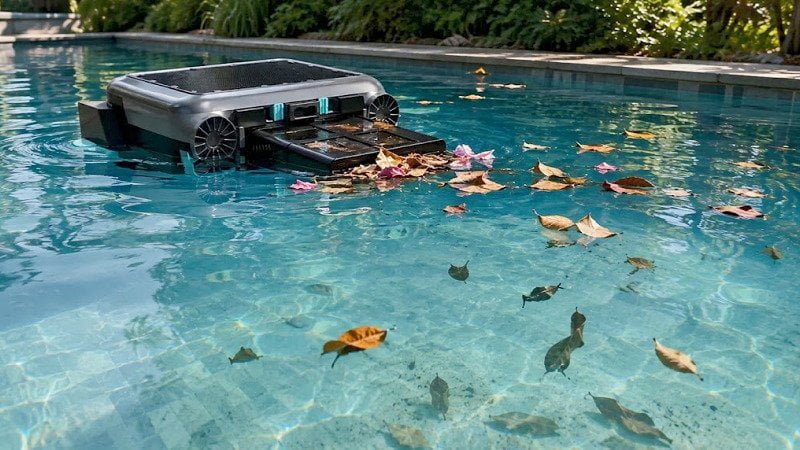
Every pool owner dreads the sight of pine needles, acorns, and large leaves piling up in their water. Pool skimmer robots seem like the perfect solution, but can they handle these tough types of debris? The answer depends heavily on the robot’s design, capacity, and intake mechanisms. Let's break it down.
These questions often come up when I talk to international distributors of pool robots. Performance expectations vary, and not all skimmer designs are equipped to deal with challenging debris types. If you’re choosing a skimmer model for high-debris environments, keep reading—I’ll explain what you should know.
The Heavy & Sharp Challenge: Tackling Sinking Acorns and Puncturing Pine Needles
Acorns and pine needles are tougher than they look—they pose specific challenges for pool skimmer robots.
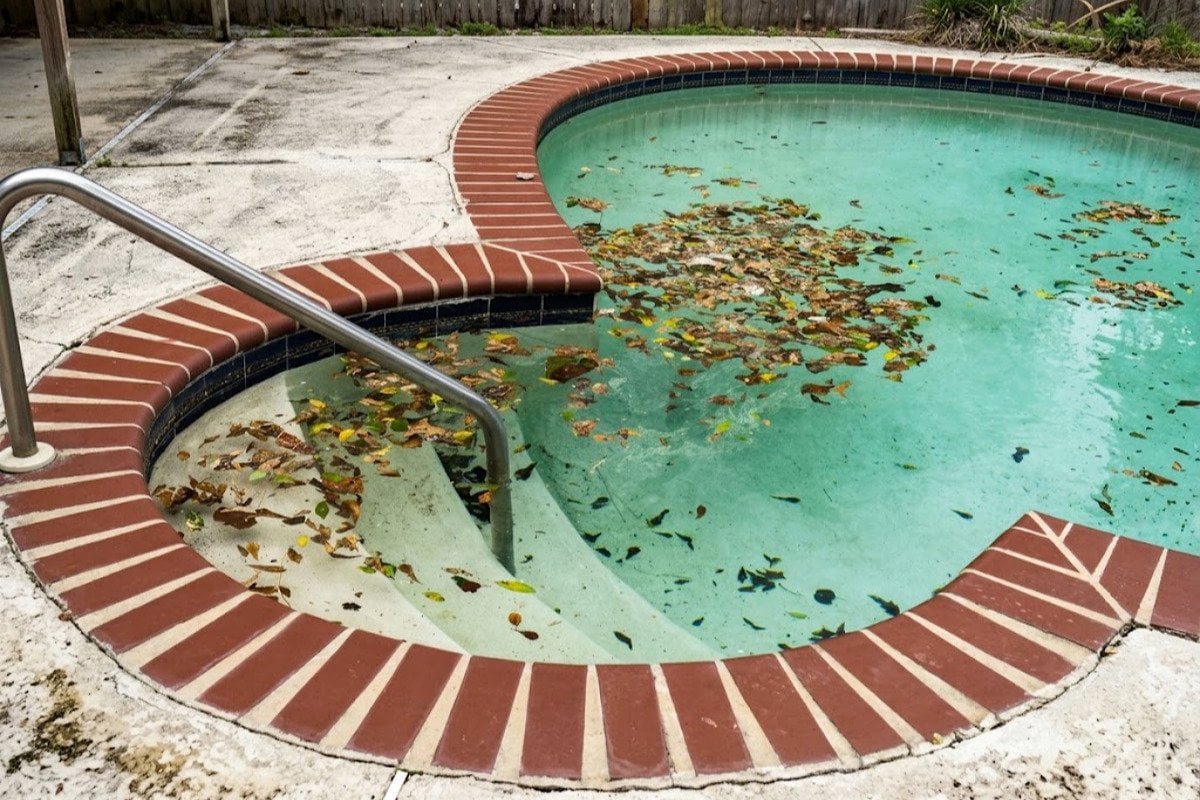
Can skimmer robots reliably collect acorns and pine needles? Not all can. Acorns are heavy and sink quickly, meaning robots require strong suction and effective intake designs to collect them.[^1] Pine needles, though lightweight, can puncture or clog filtration systems, especially in dense clusters.
Why Acorns and Pine Needles Push Skimmer Robots to Their Limits
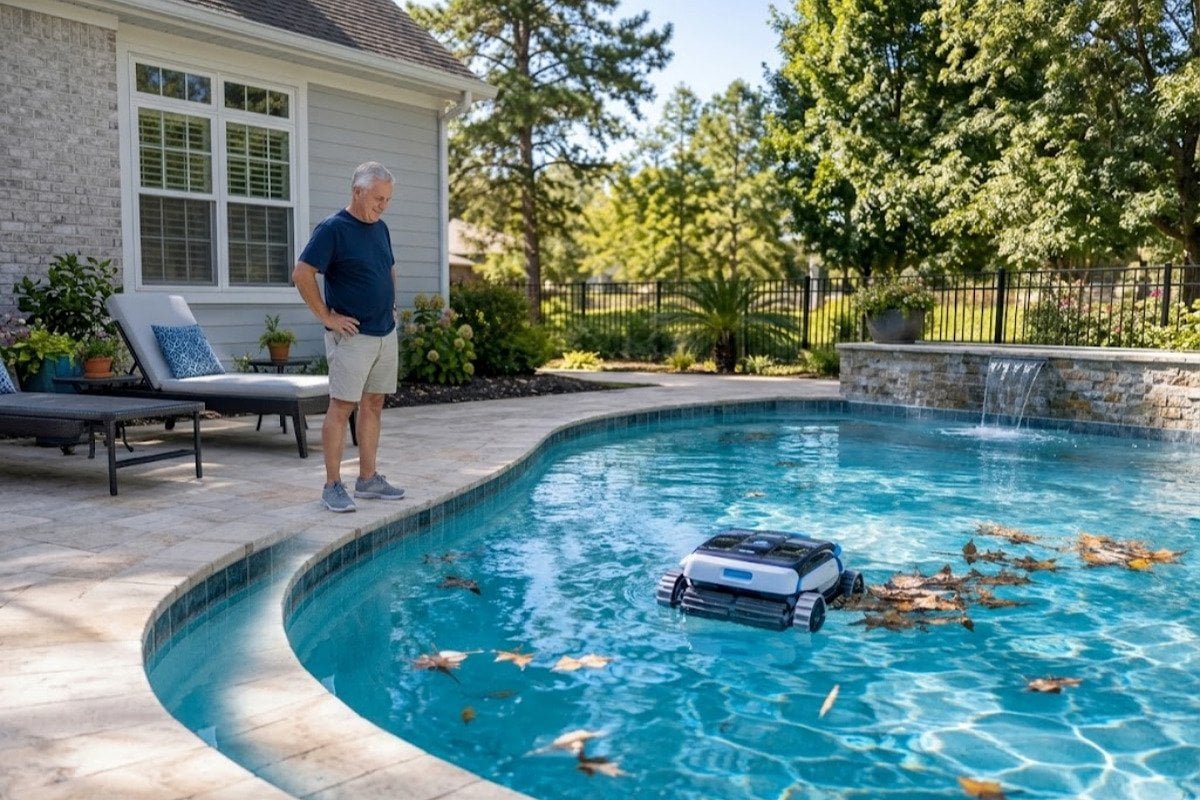
Let’s start with acorns. These sink almost as soon as they hit the water. Gravity makes them particularly challenging for robots that rely on floating and surface-skimming designs. If the robot lacks adequate suction or intake depth, acorns will stay right at the bottom—and untouched.
Then there are pine needles. While they float well and are light, they have sharp ends and tend to clump together. This creates two big problems:
- Pine needles can tear weaker filter bags.
- They clog small intake openings, quickly reducing cleaning efficiency.
Performance issues from customer feedback often trace back to overestimated suction power and poor intake designs. A robot model that succeeds with fine debris or smaller leaves might still fall short in collecting acorns and handling dense, spindly needles.
The Large Leaf Barrier: Wide-Mouth Intakes and Anti-Clogging Flap Valves
Large leaves may seem easy to collect, but they’re surprisingly challenging for pool skimmer robots.
Do skimmer robots handle large leaves well? Only those with wide-mouth intake openings, strong suction performance, and anti-clogging mechanisms can reliably capture and retain large leaves without jamming or spilling debris back into the pool.
Engineering Details That Stop Leaves From Clogging the System
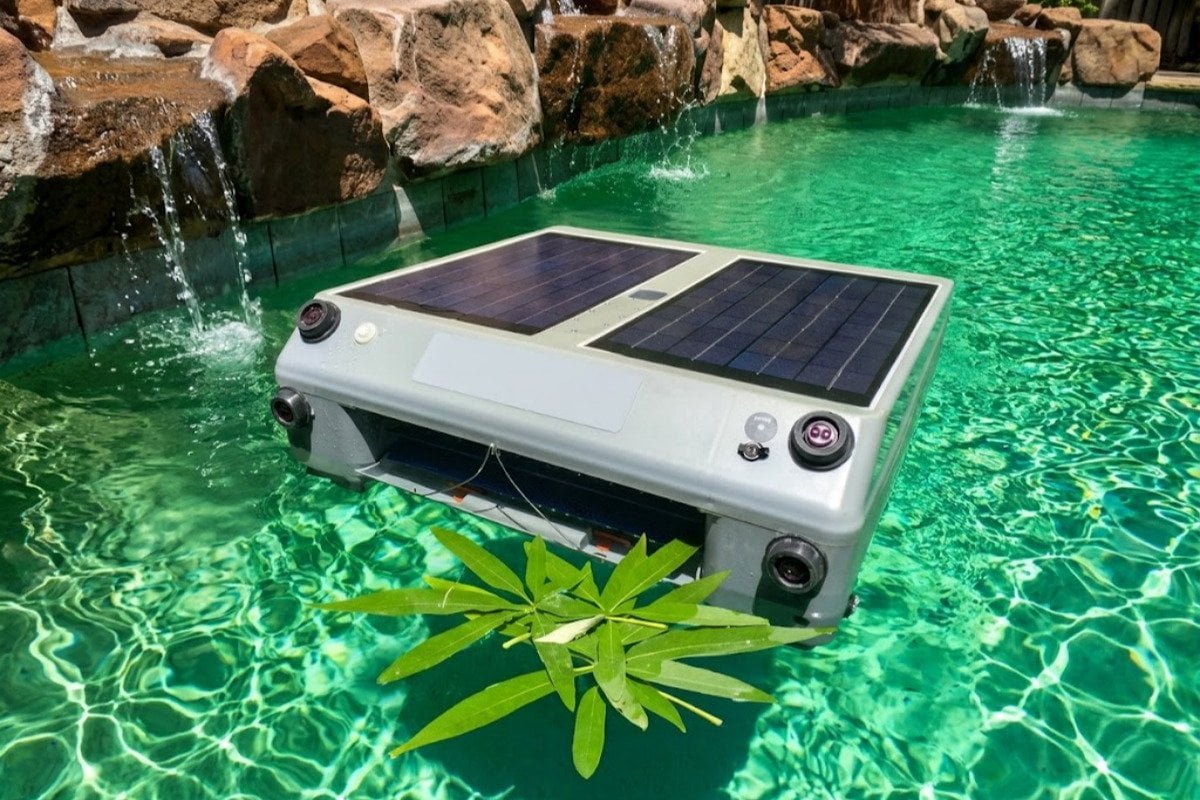
Wide leaves often get tangled as they pass through intake openings. If the skimmer robot isn’t designed with enough clearance, leaves can block suction or jam in restrictive filter paths.
This is why wide-mouth intake openings are crucial. On better-engineered models, you’ll also find features like flap valves, designed to minimize clogging by stopping leaves from overlapping inside the intake channel. Anti-return mechanisms prevent collected debris—including large leaves—from washing back out.
From what I’ve heard repeatedly from distributors, clogged intakes remain one of the top complaints. When choosing a model for high-leaf pools, not just suction but intake design and anti-clogging features play a critical role.
Capacity, Filtration, and RMA Protection: Choosing the Right Skimmer for High-Debris Pools
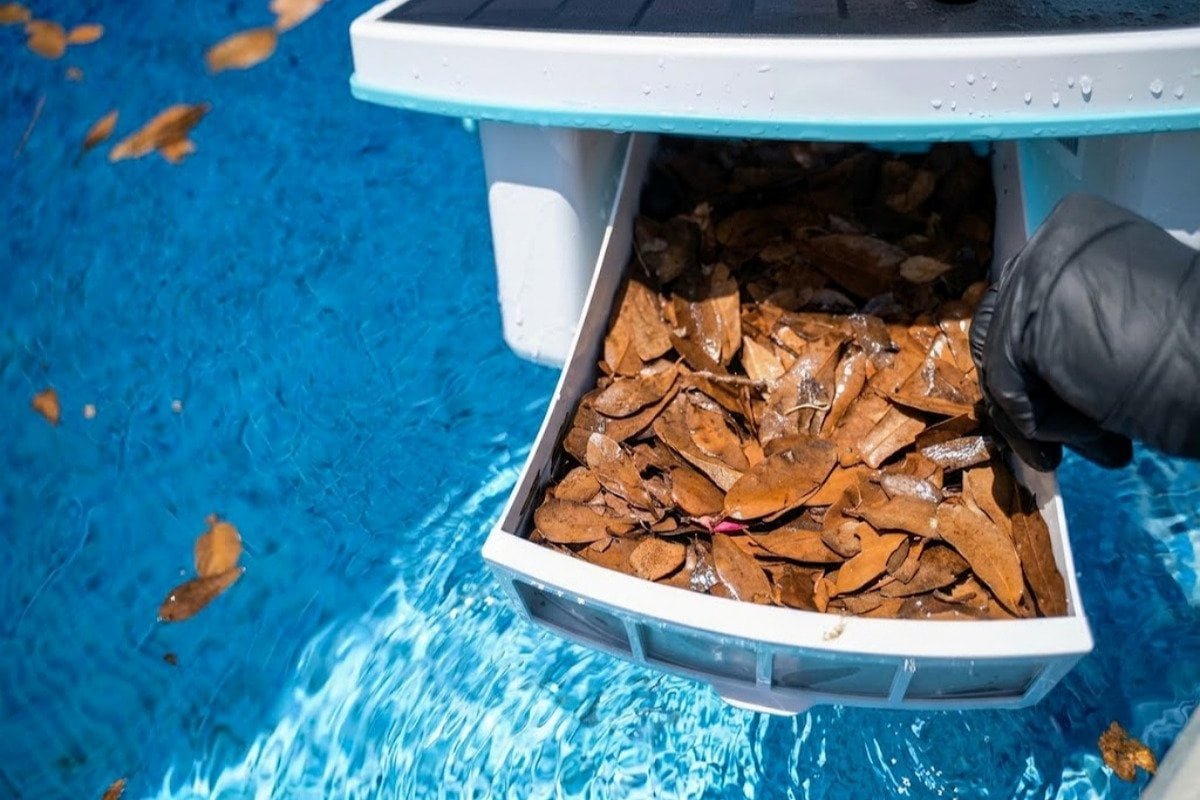
How do you select a pool skimmer robot for heavy debris environments? Look for models with substantial debris capacity, layered filtration systems, and robust engineering that minimizes clogging and wear. Additional RMA (Return Merchandise Authorization) protection plans can safeguard against performance-related claims.
Key Features to Prioritize in High-Debris Scenarios
Here’s the checklist I often recommend for buyers evaluating pool skimmers:
-
Debris Capacity: Robots used in high-debris pools need oversized collection bags or bins.[^3] Small-capacity units risk overflow and require constant emptying, frustrating users.
-
Layered Filtration: A multi-layer filtration system is ideal.[^4] Fine debris rarely gets trapped by single-layer filters, while heavy debris (acorns or wet leaves) may puncture weaker materials. Look for reinforced filter designs.
-
Anti-Clogging Design: As discussed above, features like wide-mouth intakes and flap valves reduce operational failures related to clogging or debris reversals.
Finally, consider offering distributor-level warranty or RMA coverage. I’ve seen firsthand how models without adequate manufacturing protections struggle in real-world, high-debris conditions. Customers notice very quickly when a robot fails mid-season, so being backed by a solid RMA plan ensures long-term confidence.
Frequently Asked Questions
Can all pool skimmer robots collect pine needles?
No. Many models struggle with pine needles due to their density and sharpness, which can puncture filters or cause clogging in intake systems.
Why do acorns pose such a challenge for pool skimmer robots?
Acorns are heavy and sink rapidly, requiring strong suction power and properly designed intake systems. Floating surface skimmers often miss heavier debris unless they are specifically engineered for it.
Are large leaves harder to collect than small debris?
Yes. Large leaves can block or jam intake openings, especially on robots without wide-mouth designs or anti-clogging mechanisms.[^5] Consider models with flap valves and reinforced intakes.
Which robots are best for high-debris environments?
The best models combine wide intake openings, strong suction, multi-layer filtration, and large debris bags. Make sure to verify performance specs and RMA plans with your suppliers.
Are skimmer robots better than manual cleaning for heavy debris?
Skimmer robots save time and labor but are not flawless. They perform best when selected for the specific type of debris in your pool environment.
Conclusion
Pool skimmer robots can collect pine needles, acorns, and large leaves, but not every model performs equally well. Key factors like suction power, intake size, filtration capacity, and anti-clogging features directly affect success rates with heavier and challenging debris.[^6] If you manage high-debris environments, choose models with reinforced design elements and consider distributor-level RMA protections.
Looking for skimmer robots designed with robust cleaning systems? Let’s connect—I can help identify the right fit for your market needs!
[^1]: "How do I germinate acorns? - Yard and Garden", https://yardandgarden.extension.iastate.edu/faq/how-do-i-germinate-acorns. Studies on acorn density and buoyancy confirm that acorns typically sink in water due to their high density relative to water. This characteristic poses challenges for surface-skimming devices designed for lighter debris. Evidence role: mechanism; source type: research. Supports: Acorns sink rapidly in water due to their density, which makes them difficult for surface-skimming robots to collect.. Scope note: The sinking behavior may vary slightly depending on the acorn species and water conditions. [^2]: "Best Robotic Pool Skimmers (In-Depth Testing & Review)", https://www.thepoolnerd.com/best-pool-skimmers. Educational resources on pool maintenance emphasize the importance of selecting high-performance skimmer robots for pools with heavy debris loads. Evidence role: general_support; source type: education. Supports: High-debris pools require pool skimmer robots with above-average performance and carefully evaluated specifications.. Scope note: Specific recommendations may vary based on pool size and debris type. [^3]: "Big Pool Skimmer Socks [Superfine XL]", https://www.amazon.com/clp/B0GKXP7K64. Research on pool skimmer designs shows that larger debris collection capacities significantly enhance usability and reduce maintenance frequency in high-debris environments. Evidence role: mechanism; source type: research. Supports: Oversized collection bags or bins improve performance in high-debris pools by reducing overflow and emptying frequency.. Scope note: Effectiveness may depend on the specific debris type and pool size. [^4]: "Multilayer filtration in our Dolphin X eliminates both rough and ...", https://www.facebook.com/maytronics/videos/multilayer-filtration-in-dolphin-x/354438535547433/. Studies on filtration systems in pool robots demonstrate that multi-layer designs improve debris separation and reduce clogging compared to single-layer systems. Evidence role: mechanism; source type: research. Supports: Multi-layer filtration systems are more effective than single-layer systems in handling diverse debris types.. Scope note: Performance may vary depending on the specific filtration materials used. [^5]: "How to prevent skimmer blockage due to falling leaves in a ...", https://www.facebook.com/groups/1407260559603442/posts/3861646134164860/. Studies on debris handling in pool skimmers show that large leaves often block intake openings, particularly in models without wide-mouth designs or anti-clogging features. Evidence role: mechanism; source type: research. Supports: Large leaves can block or jam intake openings in pool skimmer robots without wide-mouth designs or anti-clogging mechanisms.. Scope note: The severity of blockages may depend on leaf size and intake design specifics. [^6]: "Water Filtration Challenge – Engineering Lesson", https://www.jpl.nasa.gov/edu/resources/lesson-plan/water-filtration-challenge/. Research on pool skimmer designs confirms that these features significantly improve performance in high-debris environments. Evidence role: general_support; source type: research. Supports: Suction power, intake size, filtration capacity, and anti-clogging features are critical for handling heavy and challenging debris.. Scope note: Effectiveness may depend on the specific debris type and pool conditions.
Related Posts
How to Evaluate a Robotic Pool Cleaner Sample Before Mass Production?
# How to Evaluate a Robotic Pool Cleaner Sample Before Mass Production? When assessing a robotic pool cleaner sample before…
How to Measure Pool Skimmer Cleaning Coverage in a Repeatable Test?
# How to Measure Pool Skimmer Cleaning Coverage in a Repeatable Test? [Pool skimmer cleaning coverage is one of the…
What Warranty Terms Should Buyers Compare for Robotic Pool Cleaners?
# What Warranty Terms Should Buyers Compare for Robotic Pool Cleaners? When buying robotic pool cleaners, warranty terms can heavily…
Leave a Reply