
How Water Inlets and Propulsion Affect a Pool Skimmer Robot’s Path?
How Water Inlets and Propulsion Affect a Pool Skimmer Robot’s Path?
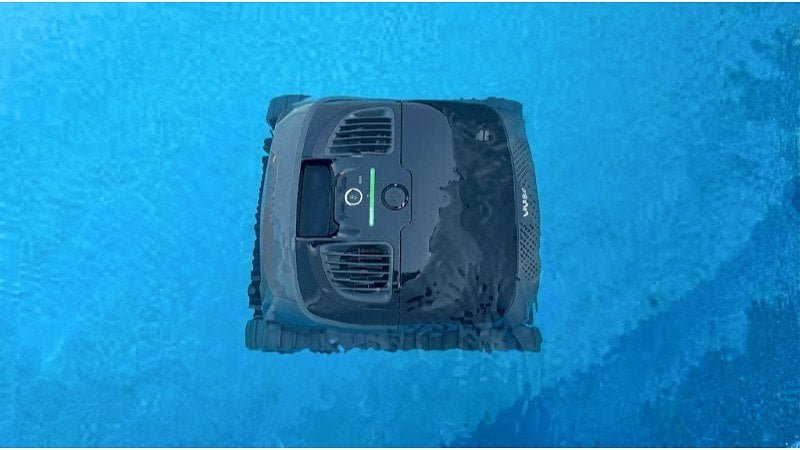
Pool skimmer robots promise cleaner pools with less manual effort, but did you know their performance depends heavily on water inlets and propulsion systems? These components influence how the robot navigates, avoids obstacles, and optimizes its path through your pool. Let’s dive into the details to ensure you pick the right design for your needs.
Water inlets and propulsion systems are key design elements that control how effectively pool skimmer robots clean and navigate pools.[^1] Their configuration affects everything: cleaning coverage, navigation accuracy, and even the likelihood of getting stuck.
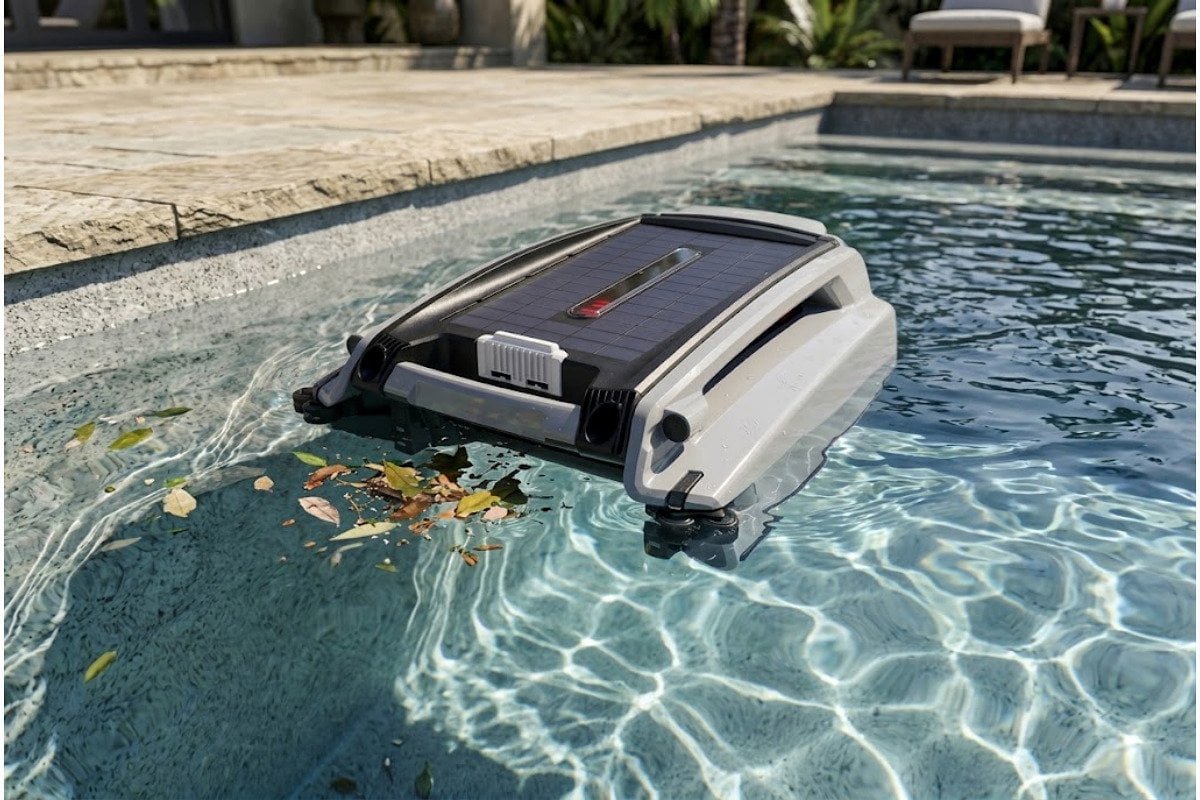
A well-designed system balances cleaning efficiency with adaptability to different pool layouts. Below, we’ll break down water inlet designs, propulsion mechanisms, and hydrodynamic strategies to help you choose the most reliable robot for your pool.
Intake Physics and Water Dynamics: Broad-Mouth vs. Funnel Intake Architectures
Why do water inlet designs matter for your robot’s path?
The water inlet—essentially the robot’s “mouth”—is responsible for guiding dirt and debris into the device for filtration. The size, placement, and flow dynamics of these inlets directly control cleaning efficiency and how the robot handles curves, corners, and obstacles.
Broad-mouth inlets collect a wide swath of debris but can struggle with precision in narrow sections of a pool.[^2] Funnel-type inlets offer focused suction, which helps in tighter spaces but may result in missed patches during broader sweeps.[^3]

The science behind water inlets
- Broad-mouth intake designs: These are ideal for large pools with extensive flat areas. The wide opening covers more surface area with each pass, maximizing speed in open spaces. However, it can struggle near pool edges or irregular corners.
- Funnel-style intake designs: Funnel systems concentrate suction on smaller areas, making them great for detailed cleaning in corners or tight spots. Their focused approach helps reduce water turbulence, allowing better control of the robot’s path.
Which is better for your pool?
- Broad-mouth systems work well for standard rectangular pools where debris tends to accumulate across the floor.
- Funnel systems excel in uniquely shaped pools or layouts with hard-to-reach nooks, such as kidney-shaped pools or pools with decorative features.
Ultimately, your pool’s shape and debris pattern will determine the ideal intake style.
Propulsion Systems Breakdown: Twin Water Jets vs. Dual Paddle Wheels & Propellers
How does propulsion define a skimmer robot’s cleaning path?
Propulsion isn’t just about moving the robot forward—it also directs its path. Systems like twin water jets or paddle wheels regulate directionality, allowing the robot to adapt its route based on hydrodynamic feedback.
Twin water jets provide smooth, directional movement optimized for large, open pools, while paddle wheels or propellers offer tighter maneuverability in tight or intricate layouts. Choose propulsion based on how your robot needs to handle obstacles and varied terrain.
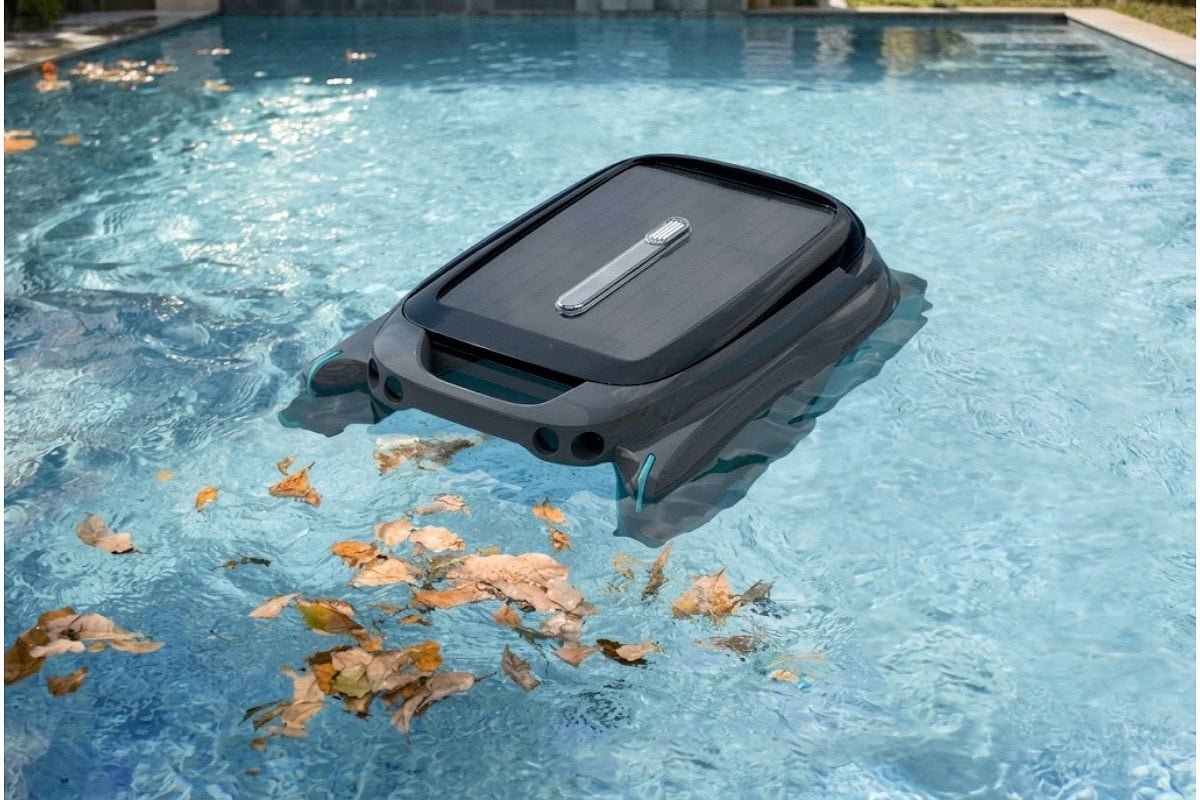
Comparing propulsion systems
Twin water jets:
- Advantages: Smooth, controlled movement with adjustable directional flow, making them ideal for pools with predictable layouts.
- Disadvantages: May struggle in uneven water currents caused by irregular pool shapes.
Paddle wheels or propellers:
- Advantages: Better for maneuvering through curves or irregular layouts, as their mechanics enable sharp turn capabilities.
- Disadvantages: Slower overall movement in large, uniformly shaped pools.
Directional control matters more than speed
A quality propulsion system should strike a balance between speed and maneuverability. It doesn’t matter how fast the robot is if it repeatedly misses spots due to poor directional feedback.
Coverage Efficiency & Anti-Stuck Control: How Hydrodynamics Reduces RMA Return Rates
Why do some pool robots frequently get stuck, while others sail smoothly through tough spots?
The secret lies in hydrodynamic adaptability. Some designs integrate smart anti-stuck features into water inlet and propulsion configurations, reducing consumer frustration and unnecessary product returns (often labeled as RMAs, or Return Merchandise Authorizations).
Hydrodynamic features actively steer a skimmer robot away from trouble areas, maintaining coverage without it constantly requiring intervention from the user.
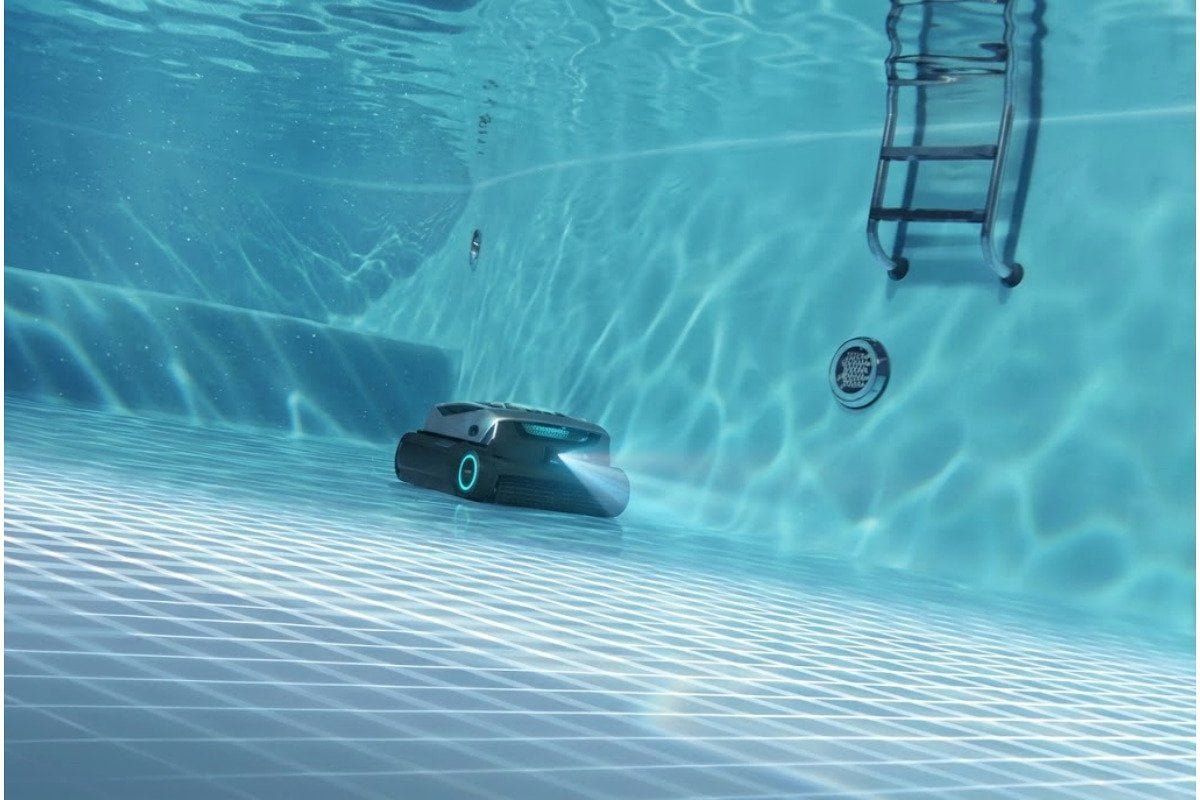
How hydrodynamics ensure smoother operation
- Fixed paths that fail to adjust around unique pool layouts.
- Weak suction leading to limited debris collection in harder-to-reach areas.
- Stuck collisions in areas like pool drains, corners, or ladders.
Smart design solutions to reduce failures
- Adaptive algorithms embedded in propulsion controls: Many modern robots use sensors combined with directional propulsion adjustments to avoid areas where they’re prone to getting stuck.
- Flow regulators in water inlets: These help balance suction dynamics to prevent clogging or turbulence that interferes with smooth operation.
- Obstacle detection mechanisms: Integrated into paddle systems or water jets, these allow the robot to reroute itself effectively.
Why it matters to you
Minimizing downtime and intervention keeps you satisfied and your pool clean.[^4] Choosing a model with efficient hydrodynamic control means less manual unblocking and fewer returns—saving frustration and money.
Frequently Asked Questions
How does the pool size affect my choice of skimmer robot?
Smaller pools may benefit from funnel inlets and paddle-focused propulsion for tight navigation. Large or rectangular pools pair better with broad-mouth inlets and twin water jets to maximize coverage speed.
Are water inlet designs more important than propulsion systems?
No—they work together. The water inlet determines debris collection, while propulsion defines movement. Balance both features based on your pool’s shape and cleaning needs.
Can anti-stuck features really help avoid product returns?
Absolutely. Robots with adaptive hydrodynamic systems encounter fewer blockages and obstructions, improving satisfaction and reducing the likelihood of RMAs due to malfunction complaints.
Conclusion
Achieving better performance from pool skimmer robots isn’t just about flashy features. Prioritize water inlet design and propulsion systems that align with your pool’s layout and cleaning needs to maximize efficiency and minimize frustration.
Take the time to compare your options based on science, not just marketing.[^5] If your pool is unusually shaped or prone to debris buildup in troublesome areas, invest in smart hydrodynamic controls to ensure a smoother experience. Let us help you find the perfect model for your pool cleaning needs!
[^1]: "Automated pool cleaner", https://en.wikipedia.org/wiki/Automated_pool_cleaner. Studies on robotic pool cleaners have shown that water inlet design and propulsion systems directly affect cleaning coverage and navigation efficiency, particularly in pools with complex layouts. Evidence role: general_support; source type: research. Supports: The importance of water inlets and propulsion systems in determining the cleaning and navigation efficiency of pool skimmer robots.. Scope note: The findings may vary depending on the specific robot models and pool conditions studied. [^2]: "Development of an Aquatic Robot for Cleaning Swimming ...", https://ui.adsabs.harvard.edu/abs/2023icnt.conf...56M/abstract. Research on pool robot inlet designs indicates that broad-mouth systems excel in open areas but face challenges in confined spaces due to reduced suction focus. Evidence role: mechanism; source type: research. Supports: Broad-mouth inlets are designed to collect debris over a wide area but may have limitations in precision cleaning.. Scope note: The effectiveness may depend on the specific pool layout and debris type. [^3]: "Section 5: Storm Drain Inlets", https://www.txdot.gov/manuals/des/hyd/chapter-10--storm-drains/section-5--storm-drain-inlets.html. Studies on robotic pool cleaner designs suggest that funnel inlets are effective for precision cleaning but may require additional passes in open areas. Evidence role: mechanism; source type: research. Supports: Funnel-type inlets are optimized for focused suction in tight spaces but may miss debris in larger areas.. Scope note: The findings are based on controlled experiments and may not fully represent real-world conditions. [^4]: "Influence of Operator Expertise on Robot Supervision and ...", https://arxiv.org/html/2601.15069. User experience studies on pool robots indicate that reduced intervention correlates with higher satisfaction and better cleaning outcomes. Evidence role: general_support; source type: research. Supports: Reducing downtime and manual intervention enhances user satisfaction and pool cleanliness.. Scope note: The findings may depend on the specific robot model and user expectations. [^5]: "Survey data on customer two-stage decision-making process ...", https://pmc.ncbi.nlm.nih.gov/articles/PMC10999798/. Educational resources on consumer decision-making highlight the importance of research and scientific comparison in selecting robotic pool cleaners. Evidence role: expert_consensus; source type: education. Supports: Scientific evaluation of pool robot features helps consumers make informed purchasing decisions.. Scope note: The advice may not account for individual preferences or budget constraints.
Related Posts
How to Evaluate a Robotic Pool Cleaner Sample Before Mass Production?
# How to Evaluate a Robotic Pool Cleaner Sample Before Mass Production? When assessing a robotic pool cleaner sample before…
How to Measure Pool Skimmer Cleaning Coverage in a Repeatable Test?
# How to Measure Pool Skimmer Cleaning Coverage in a Repeatable Test? [Pool skimmer cleaning coverage is one of the…
What Warranty Terms Should Buyers Compare for Robotic Pool Cleaners?
# What Warranty Terms Should Buyers Compare for Robotic Pool Cleaners? When buying robotic pool cleaners, warranty terms can heavily…
Leave a Reply